
Mystery shopping research: find the service handoff to fix
A caller is told to arrive before 4 p.m. although the branch offers booked evening drop-off. Follow the evidence that separates a routing repair from courtesy coaching.
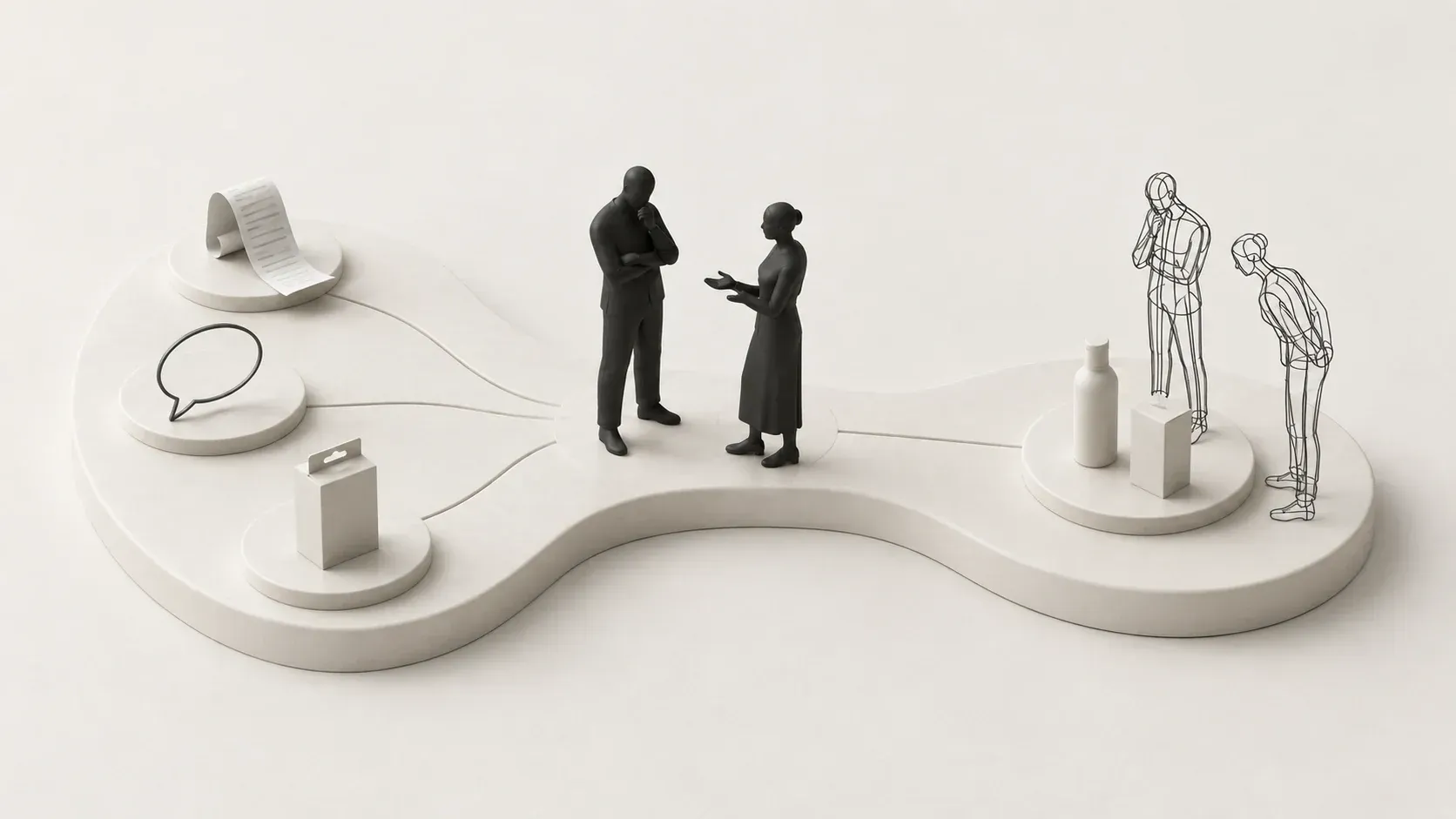
Mystery shopping research uses trained evaluators acting as potential customers under an agreed scenario, without announcing the particular check during the encounter. Westmere Cycles, a fictional bicycle-service business, advertises evening drop-off by appointment at Mill Street. Operations needs to know whether a new customer calling the branch’s published number can arrange it.
Mill Street’s evening appointment is the test
The decision is whether to change contact routing, clarify the booking instructions or revise the service being offered. “Improve customer experience” is too broad to choose among those actions. The mystery-shopping brief needs a particular inquiry that should reveal where the handoff works or breaks.
MSPA's 2023 guide describes the method around business performance at customer contact, including telephone, digital and physical channels. Choose the channel through which this service is actually offered. A successful shop-floor welcome would leave Westmere's telephone route untested.
Brief a believable customer and an ordinary inquiry
Westmere's shopper will act as a new adult customer seeking a routine bicycle service. The agreed inquiry concerns dropping the bicycle off at 5:30 p.m. on the following Thursday. The shopper asks how to arrange it, without making an appointment or consuming a service slot.
Give the shopper enough background to answer ordinary follow-up questions consistently. Specify the branch, service, intended arrival and any constraints relevant to eligibility. Avoid an elaborate story designed to catch staff out. The provider should rehearse the inquiry and explain how shoppers will handle an unexpected transfer or request for information.
The MRS March 2024 mystery-shopping guidance recommends credible scenarios and factual reporting. Its own-staff guidance says staff should know that checks may occur and whether recording will be used; the particular encounter needn’t be announced. Treat this as UK professional practice and confirm requirements for the actual workplace.
For this example, Westmere's program notice is already in place and the provider uses written notes made after the call. Agree the actual capture method, reporting use and applicable requirements before fieldwork. An unannounced inquiry does not automatically authorize an audio or video recording.
Comparability depends on the service actually offered
The company must supply the service conditions against which the visit will be read. In this case, Mill Street genuinely offers booked Thursday drop-offs between 5 and 6 p.m., and the relevant arrival is available. Keep the dated policy and availability reference separate from the shopper's account of what staff said.
If the program covers several branches, establish which ones offer the evening service. A branch that does not offer it should explain its actual alternatives, rather than be marked down for failing another branch's rule.
Agree the spread of days, times and locations around the question. To compare the same inquiry across branches, retain comparable opening and service conditions. To investigate busy periods, deliberately include them and preserve that distinction. MRS's guidance recognizes that timing can affect the service encountered and that some comparisons require matched timing.
Record departures from the plan. A call made after the agreed desk has closed, an unanswered call and a completed conversation are different outcomes. Decide how each enters the analysis. Do not let a smaller set of convenient completed calls silently become the whole program.
The call ends without a booking route
On Tuesday at 5:12 p.m., the shopper calls the number published on Mill Street’s page. The person answering identifies the team as the service-booking desk. The shopper asks: “I'd like to arrange a routine bicycle service. Can I drop it off at Mill Street at 5:30 on Thursday? What do I need to do?”
The reply says bicycles must arrive before 4 p.m. The shopper asks whether there is another way to arrange the advertised evening drop-off. The desk repeats the daytime instruction and supplies no alternative route. The shopper ends the inquiry without a booking.
The provider returns the encounter in terms the operations owner can investigate:
Record | Operational use |
|---|---|
Branch page, published number, call date and time | Establish the customer-facing entry route and the conditions of this check. |
Agreed enquiry and actual words used | Check that the shopper asked for the intended service without changing the scenario. |
Desk identification and reply | Locate the reported handoff and the instruction that needs checking. |
Follow-up question and response | Show that the evening requirement was raised explicitly and remained unresolved. |
No booking or alternative route supplied | Describe the observed end of this enquiry, without inventing a lost sale. |
An impression such as “the response felt unhelpful” can be retained separately. It cannot replace the instruction given or establish why the employee gave it. Nor does this call show that every evening inquiry fails, how many customers abandon booking or how satisfied Westmere's customers are.
Routing checks explain the wrong instruction
Westmere's contact-system owner checks the published number and its routing configuration. It sends the inquiry to a central daytime booking desk. The branch-policy owner confirms that Mill Street's local team handles the evening appointments. Those are additional operational checks, not facts the mystery shopper could establish merely by hearing the reply.
The correction is specific: route Mill Street service inquiries to the team that can arrange its advertised appointments, with a current fallback destination when that team is unavailable. Give the central desk an accurate explanation of that handoff. Until the route is working, provide a verified way to reach the appropriate team rather than repeating the daytime-only instruction.
General courtesy coaching would leave this routing defect in place. Equally, if the inquiry had reached the right team and an outdated instruction caused the answer, the action would concern that instruction and its use. The returned facts should decide the correction.
After the change, check the route technically, then repeat an appropriate customer inquiry under comparable conditions. A completed handoff would support that encounter's result. Establishing a wider improvement needs the program's planned coverage and comparison; the fictional call supplies no measured uplift or guarantee of future consistency.
Ask actual customers when their experience is the question
Suppose Westmere’s agreed checks deliver the required booking route, but recent service customers still report dissatisfaction or don’t return. They may have concerns about the repair, collection, commitment or an alternative provider. A scripted inquiry can’t reconstruct those experiences or identify which explanation applies. Start by studying the service those customers actually received.
Our customer satisfaction research agency guide addresses feedback tied to service people actually received. Our customer journey research guide follows a real purchase or use attempt across its encounters, records and explanations.
Use customer research when the decision depends on actual dissatisfaction or why an individual purchase stopped. Use mystery shopping when the unresolved question concerns what happens during a credible, agreed service encounter. Both can inform the same improvement program while keeping their sources distinct.
The advertised appointment needs a route people can use
Once Westmere confirms the service it can deliver, it may need to explain evening drop-off more clearly, compare available appointment arrangements or investigate which customer groups value them. Those alternatives should reflect the actual service and existing operational evidence.
At Vensia, we build simulated audiences grounded in purchase, behavioral and research data. Customer evidence and earlier research can add context. Our team builds the audience, runs surveys, interviews and comparisons, and helps interpret the responses. Follow-up questions to the same modeled audience can explore the reasons behind a difference.
For Westmere, a study could compare complete, feasible appointment offers or explanations among relevant adult customers. The modeled response can inform what to develop or investigate next. It doesn’t show which desk answered a real call, audit staff behavior or verify that a service route now works. Keep those conclusions attached to the human encounter and operational checks.
Book a demo to compare explanations of the evening appointment once its booking route and availability are confirmed.
