Red Bull Protein: An Illustrative Concept Study
See how a concept test narrowed three protein-drink formats to one offer and starting audience, using results from 2,000 simulated U.S. adults.
In this concept study, which Red Bull did not commission, Vensia compared three unofficial protein formats, then ran a focused study of one clear citrus drink with 20g protein and 80mg caffeine at $3.99. The follow-up modeled 2,000 U.S. adults and asked who would buy a full-price can once and who would return for more.
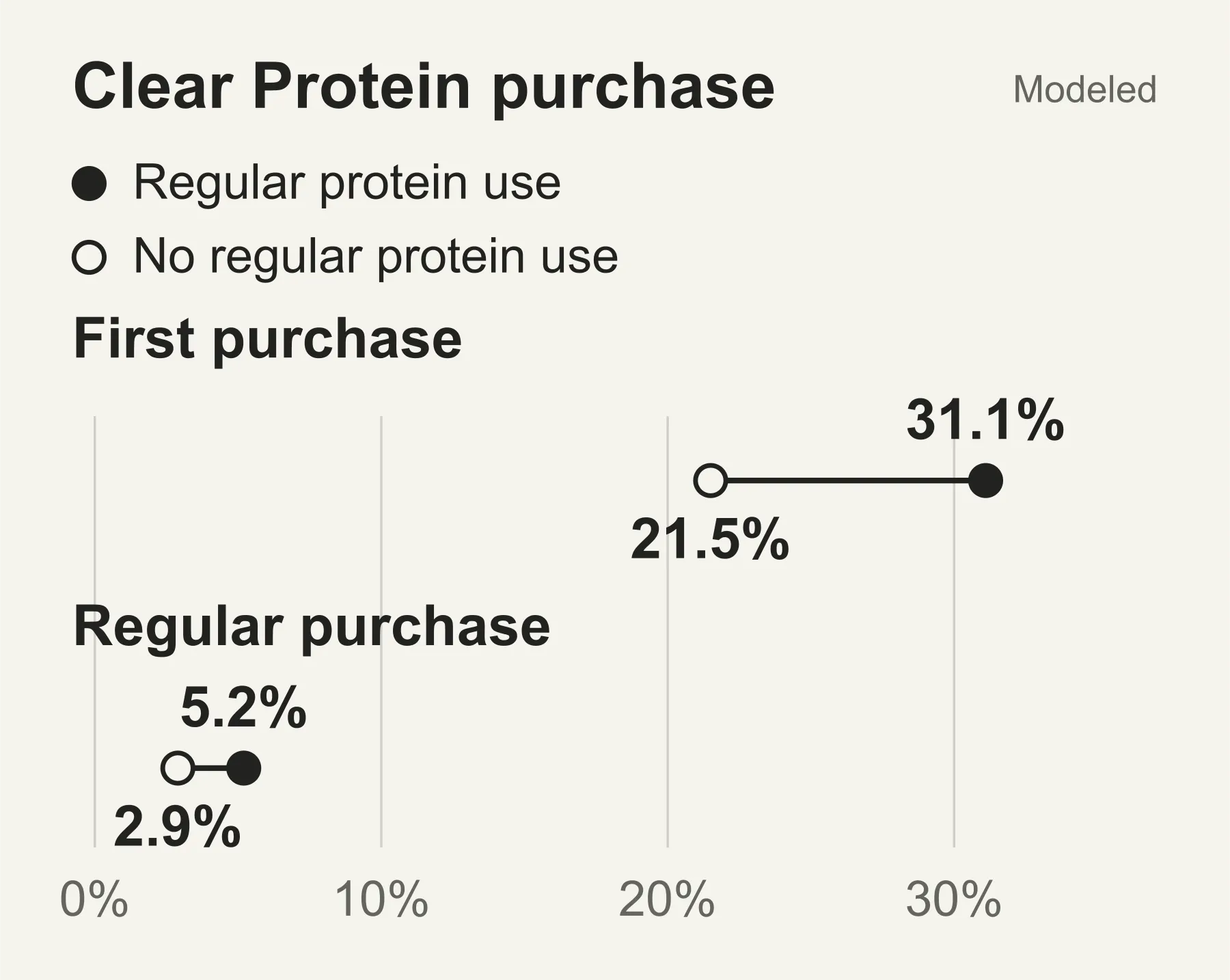
The clearest starting audience already buys protein products. In the clear-drink study, 31.1% of those users were modeled to buy at least once and 5.2% to buy regularly; among adults without that habit, the figures were 21.5% and 2.9%. That is a sharper brief for a paid product test than a broad protein-energy launch.
First, Vensia tested three formats
The earlier study compared these three proposed formats:
Concept | Format and composition |
|---|---|
Protein Shake | Format: Vanilla milk-based shake Protein: 25 g Caffeine: None |
Protein + Energy | Format: Vanilla milk-based shake Protein: 25 g Caffeine: 80 mg |
Clear Protein Energy | Format: Citrus clear drink Protein: 20 g Caffeine: 80 mg |
Vensia showed the combined drinks at $3.99 inside work and exercise routines. The question was when one bottle might replace separate protein and caffeine choices.
Timing made the combination useful
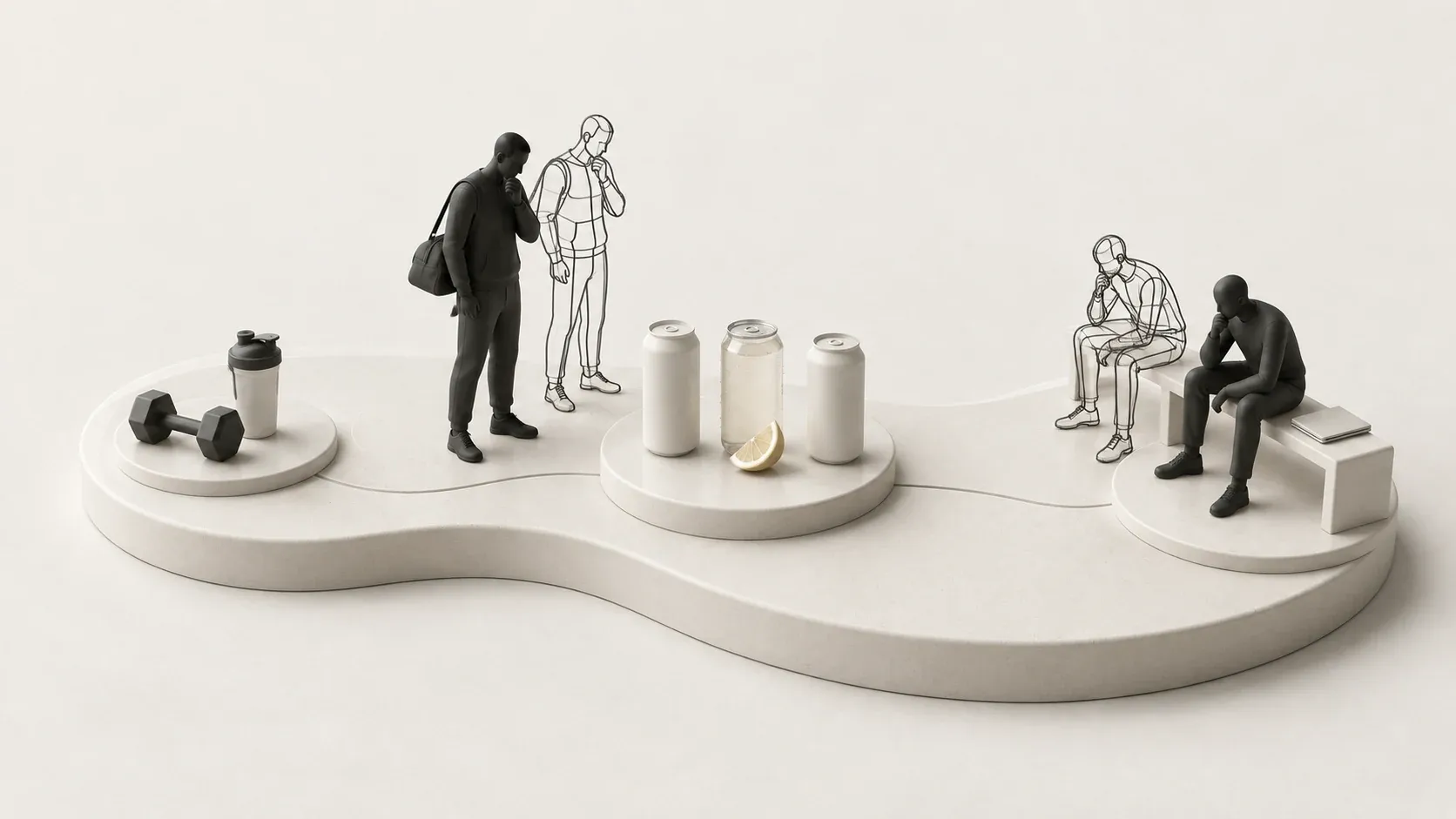
After training and before work, protein and caffeine both still had a job to do. At a work break where protein was already covered and coffee was free, the same ingredient list had less to replace.
In the post-training situation, Vensia reported 59.0% selecting Protein + Energy and 35.2% selecting Clear Protein Energy in their respective comparisons. In a separate work-break scenario run with the work, commute and shift group, 4.0% chose Protein + Energy and 12.0% chose Clear Protein Energy. These results identify occasions worth testing, not market shares.
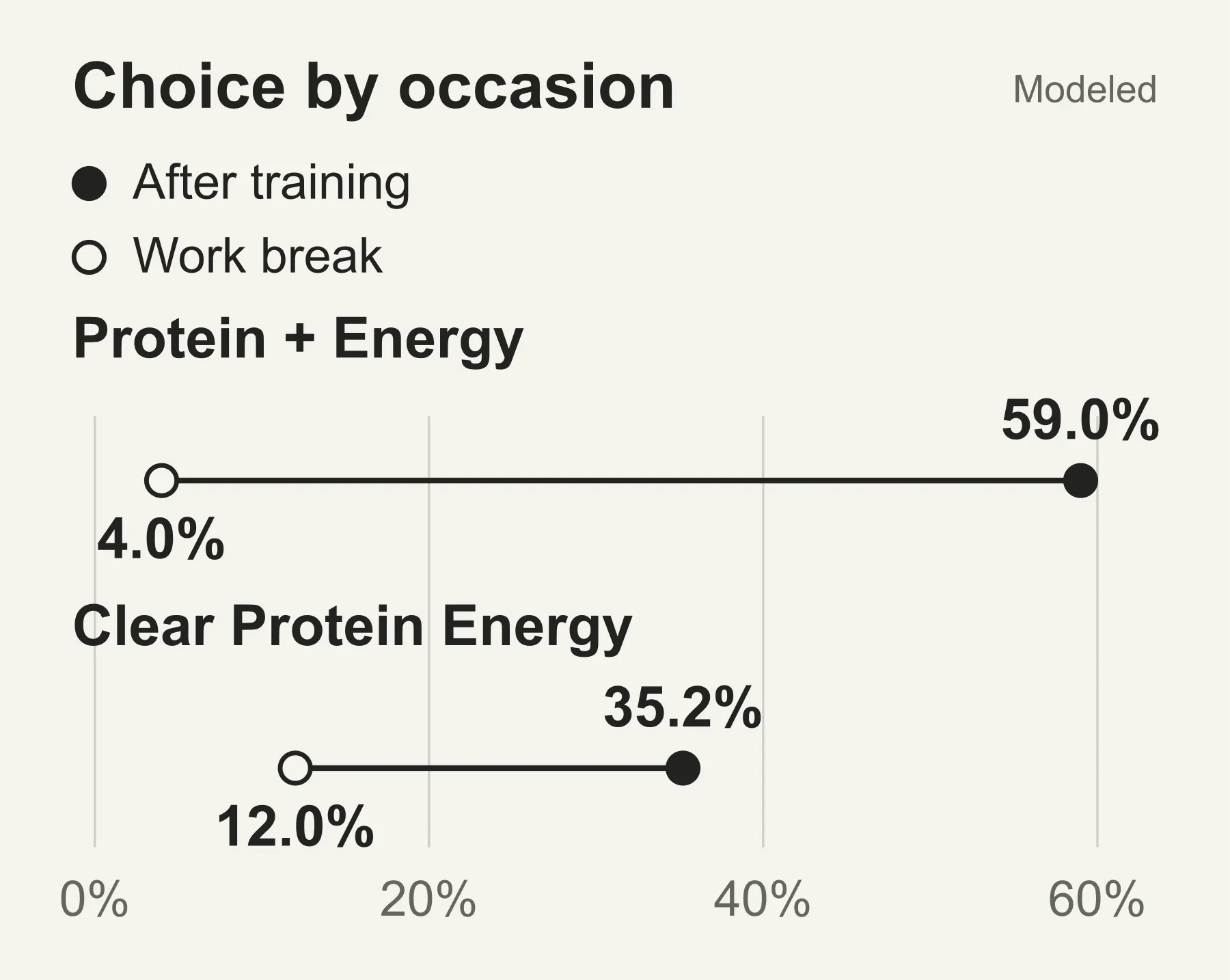
The first study narrowed the timing question: who still needs protein and caffeine in the same window? Its scenario cell bases were not supplied, so those percentages do not describe whole-market demand. The follow-up asked a different question: who would buy one specific clear drink more than once?
View an example study to inspect the audience, offer and findings before planning your own.
Then Vensia tested the clear concept
The follow-up tested a 330mL clear citrus drink with 20g protein and 80mg caffeine at $3.99. A first purchase meant buying at full price within eight weeks; regular buying meant at least four cans in weeks 5–8 after that purchase, across two shopping trips.
Vensia compared existing protein users, current Red Bull customers and adults without a regular protein habit. Among protein users, 31.1% were modeled to buy at least once and 5.2% regularly. The comparable rates were 21.5% and 2.9% without regular protein use. Current Red Bull customers were at 26.2% and 4.3%, but that audience overlaps the other two. Separate subgroup counts are not given here; the total 2,000 profiles is not the base for every audience rate.
In the modeled explanations, protein buyers who also use energy drinks described forgotten servings and travel without an easy way to prepare protein; some coffee-and-protein buyers wanted a lighter daytime option. Many nonbuyers kept their cheaper products or preferred protein and caffeine at different times. Those explanations suggest testing the buying routine alongside brand familiarity.
What the first purchase would replace
A separate original clear-drink run supplied the substitution figures: 22.0% of forecast first buyers would replace a protein product, 21.5% would add a purchase, and 4.1% would replace an existing Red Bull purchase. These are shares among concept buyers in that run, separate from the updated audience rates.
About 76.6% of protein users forecast to buy the clear drink regularly were not current Red Bull customers, based on rounded study weights. That widens the first audience beyond cross-sell, but a paid test still needs to measure actual repeat buying and what each purchase displaces.
The paid test that follows
If you were developing this proposition, start with existing protein users and the clear 330mL drink at $3.99. Study energy-drink and coffee-or-tea routines separately. Put it beside stocked powder, a familiar shake, the usual caffeinated drink and the option to buy nothing. Track full-price first purchases, repeat buying under the study’s four-can definition and substitution.
Test buyers without a regular protein habit separately; their modeled regular-purchase rate was 2.9%. Taste, texture and routine fit need real people and a physical product. The earlier creamy format can have its own prototype test, but its scenario ratings are not a competing sales forecast.
Vensia narrowed a broad category idea to an audience, occasion, offer and measurable paid test. The current clear-drink evidence points to existing protein users first; the production decision depends on observed repeat purchases and margin.
Bring the complete offer and the buying routines it must serve to Vensia. A modeled comparison can narrow the audience and occasion for a product test, while the physical prototype and paid repeat purchases determine whether the proposition works in practice.
Sources: Vensia, “Red Bull Buyer Audiences,” September 2026 (three-format occasion comparisons); Vensia, “Red Bull Clear Protein: Purchase Potential by Audience,” 29 September 2026 (focused concept, 2,000 modeled U.S. adults). The newer report uses updated $3.99 audience results where available and separate original-run substitution estimates.