
Restaurant market research: choose how lunch should work
Choose between advance-order collection and seated lunch service. Explore when guests can commit, what each proposal includes and which service to develop.
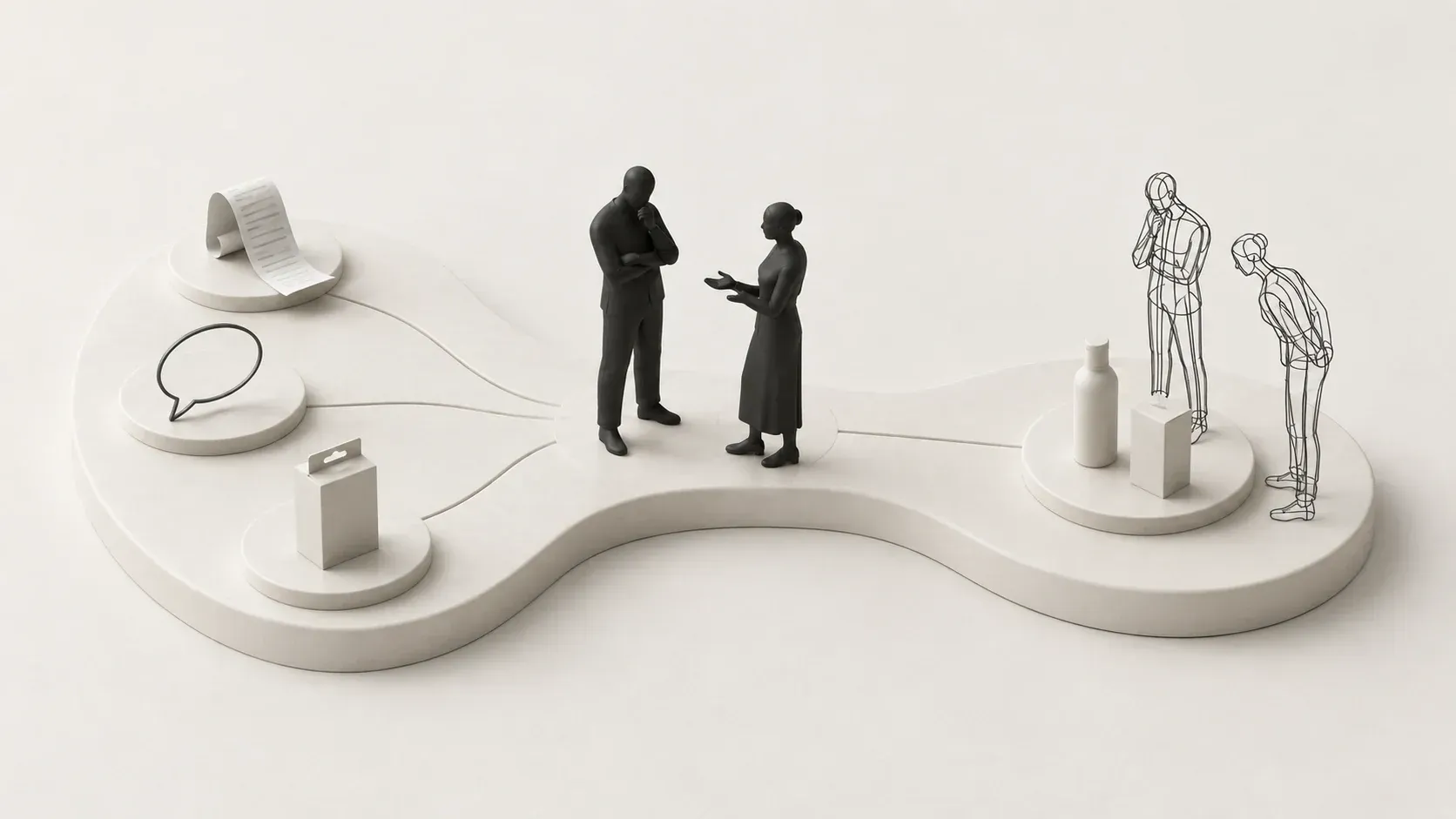
Restaurant market research helps an operator decide what to develop around a meal by examining guests’ needs, alternatives and buying conditions. For a weekday lunch service, that might mean choosing between advance orders for collection and ordering at the table. The useful evidence explains when guests can commit, what they expect to receive and which alternative they would actually choose.
A guest might know what they want at ten in the morning but have an unpredictable lunch break. Another can arrive reliably at one, yet wants to choose after sitting down with a colleague. Both can like the menu while needing different service conditions.
The lunch decision begins before the break
Consider an illustrative restaurant developing a weekday lunch service with the same lunch dishes, portions and total meal charge in both proposals. Before showing them, the operator must fill in the actual charge, collection hold time and late-pickup outcome, seated cancellation and late-arrival rules, available menu and intended service duration. The outline below fixes the comparison’s structure; those missing terms must be visible for guests to evaluate complete offers.
With advance-order collection, the guest selects and pays for a meal by 10:30, then collects during a chosen fifteen-minute window between noon and two. The proposal includes no table. The operator’s stated terms allow cancellation before the order cutoff; after that, there is no refund. Include the completed hold time and late-pickup outcome on the same card.
With seated ordering, the guest books a table for a stated arrival time, chooses the meal on arrival and pays after eating. The operator supplies the booking, cancellation and late-arrival terms, available lunch menu and intended service duration. Those conditions must be visible in the comparison. A table booking does not itself promise that food will arrive within the guest's break.
The comparison is about two different ways of having lunch. Keeping the dishes and meal charge consistent helps reveal the value of choosing earlier, collecting a meal or sitting down. It does not make the operating costs or guest experience identical.
Mina usually knows her food choice in advance, but meetings can move her break. Daniel can reserve a reliable lunch hour and wants to eat with a colleague whose food choice he does not know. These situations expose questions about commitment and shared choice; research still needs to establish who faces them and which service those guests prefer.
Find out what guests are willing to decide early
Begin with how the intended guests currently arrange lunch: when they learn their break time, who joins them, where they can eat and which other options remain available. Include people who use nearby competitors or bring food, as well as existing guests. Restricting the study to enthusiastic regulars could hide the reason a new service needs to exist.
Then show the complete proposals. Ask guests to explain when they would order, when they would leave to collect or arrive, and where they would eat. An answer that assumes a table comes with collection describes an offer the restaurant has not made. Someone who thinks they can cancel a prepaid meal after 10:30 has also evaluated different terms.
For Mina, the important issue may be committing before she knows her break. Changing the collection window might help; a more attractive photograph would leave that uncertainty untouched. For Daniel, seated ordering could preserve the ability to decide together. A preorder might still work if both diners can commit early and have somewhere suitable to eat, but that needs investigation.
Keep these explanations beside the choices. If a preferred service only works after guests silently relax its terms, the operator needs to revise the service or its explanation before treating that preference as useful evidence.
Our concept testing guide explains how to compare a defined proposal with credible alternatives. Here, the distinctive question is how the timing of the order changes the lunch someone can arrange.
Findings can change service conditions
The research should leave the team with a development recommendation and the reasoning behind it. A possible finding might be that guests welcome collection but reject an early, irreversible commitment. That would suggest investigating a later cutoff or different cancellation condition, subject to the operator's ability to provide it. It would not support launching the original proposal under a more reassuring name.
Another possible finding could favor seated lunch among people arranging a shared break. The practical implication might concern reservable tables, a menu available to the whole party and the time guests expect to spend together. The operator still needs to establish which service conditions it can deliver.
Compare the revised service against the guest's realistic alternative, including bringing lunch or continuing with an existing restaurant. Report who the recommendation concerns. Support among guests with reliable breaks cannot establish equivalent appeal among people whose schedules change each morning.
If neither version solves a meaningful lunch problem, preserving the current offer can be a useful outcome. That decision should guide whether the team commits to a service change.
Service appeal and eating the meal need different evidence
Descriptions and modeled responses can explore a proposed service, comprehension and tradeoffs. They cannot establish the actual taste of lunch, its condition after collection or how long the kitchen and front-of-house team take to serve it.
Food & Drink Resources, for example, lists both online restaurant research and physical sensory testing among its services. That distinction matters when choosing research: evaluating a service description and eating a prepared meal answer different questions.
When the uncertainty concerns the food itself, our sensory research guide explains the role of physical product evaluation. Our broader food market research guide covers food-product development. Neither substitutes for testing the restaurant's actual service operation.
A limited service trial can observe readiness, collection, table use, cancellations and repeat visits. Keep those observations separate from earlier stated or simulated choices. An attractive concept does not establish throughput, incremental sales or profit, and a successful lunch at one location does not automatically establish the same result elsewhere.
The next brief fixes the lunch commitment
At Vensia, our team builds data-grounded simulated audiences, runs research and helps interpret the findings. A lunch comparison can put the complete service alternatives beside the guest routines described in existing customer research. We can explore how people understand each proposal, compare responses across relevant groups and investigate the reasons behind their choices in an interactive report.
Our audience-building guide explains how the population relates to the question. The study should describe whose routines it represents and what data support that choice.
Mina’s break may move after the 10:30 cutoff; Daniel’s choice may depend on his colleague. A Vensia demo can help turn the finished service terms into a comparison of those commitments, so your team can choose which cutoff, cancellation condition or shared-lunch service deserves development.
