Ad testing: make the creative work before you buy reach
A Volvo demonstration and two fictional iced-tea edits show how to connect remembered scenes with brand meaning, then turn the diagnosis into a production change.
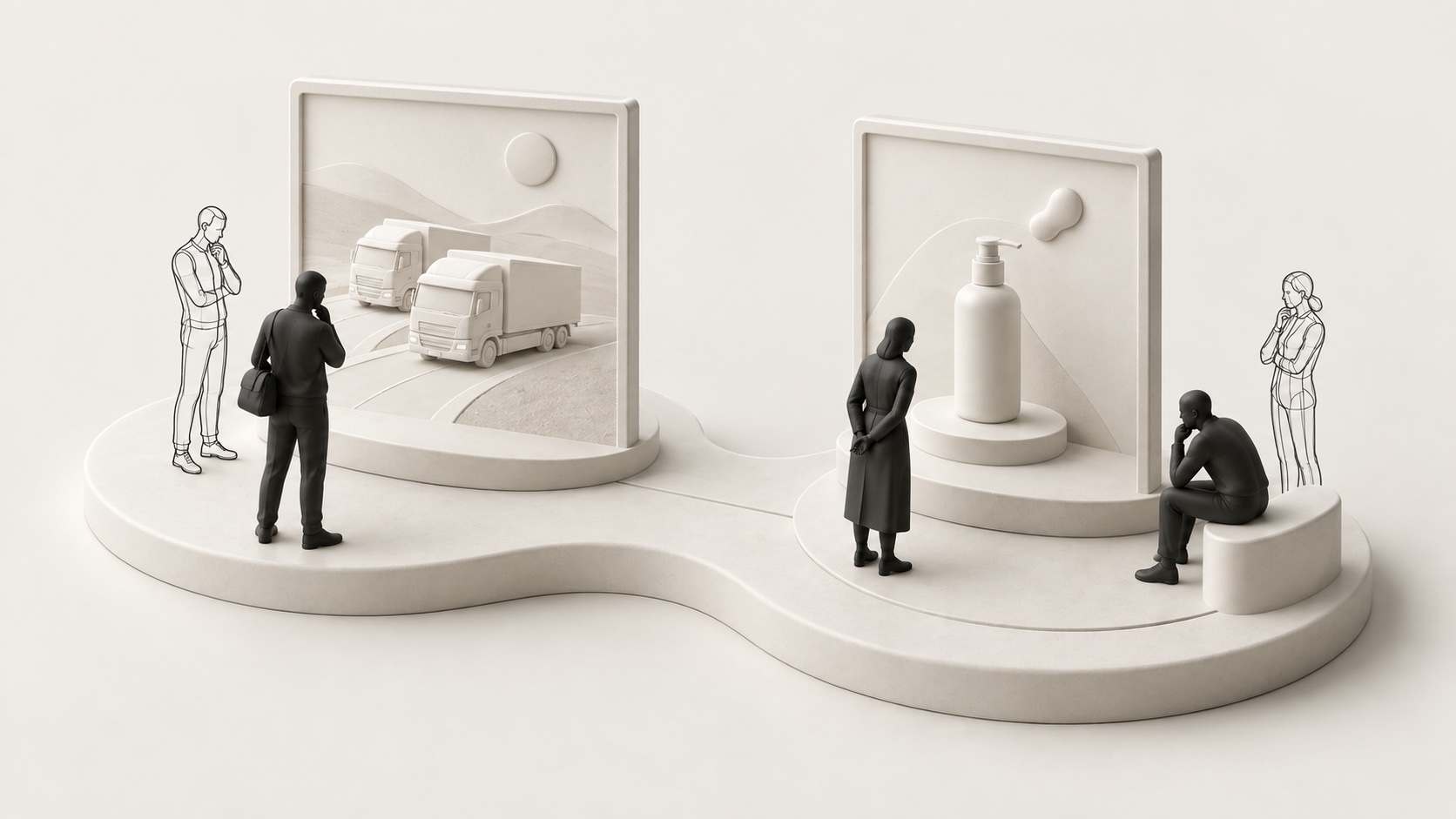
Ad testing helps you choose a creative route and identify the edit to make before buying reach. For Wren, a fictional unsweetened iced-tea brand, the choice is how to open a 12-second feed video: an afternoon break or the branded bottle first? Both edits use the same footage and offer, so the test can focus on what their different sequence communicates.
Judge the execution against the campaign's job: what viewers remember, which brand they connect it to, what promise they take away and what they expect to do next. Keep those findings separate so an entertaining scene does not conceal a missing offer or brand.
The campaign objective sets the test
Name the job of the campaign. A brand-building film needs to make the brand and its meaning memorable. A product ad needs to explain the offer and give the right buyer a reason to act. The same entertaining scene can help one objective and distract from another.

Then name the choice. Selecting a whole creative route calls for a comparison of the complete executions. Choosing between headlines calls for the same image, offer and call to action with the headline changed. That distinction makes the finding useful to the person who has to approve the next version.
What gets remembered?
Ask which moments, product and brand people remember after first exposure. Then check whether the remembered scene carries the intended brand or message.
What does the buyer take away?
Check the meaning in the viewer's own words. Identify a clear promise, a misunderstanding or a missing piece of the offer.
What earns the next step?
Understand who finds the offer relevant, what holds them back and whether the destination delivers the expectation created by the ad.
Agree these priorities before looking at the results. Keep each measure visible. An overall average can hide the exact weakness the next edit needs to address.
Related guides: AI research vs A/B testing.
What the placement lets viewers see and hear
When testing with Vensia’s synthetic users, define the buyer groups and give the research team both the creative and its intended placement: a feed video, a short pre-roll, an outdoor panel or a product carousel. Include the device, dimensions, sound conditions and surrounding content in the study brief. Use that context to compare how the simulated groups interpret the brand, offer and intended next step.
Use the same presentation and question sequence across candidates. First ask what the ad communicated, which brand it represented and what action it invited, without supplying those answers in the question. Then ask follow-ups to locate the confusing line, weak cue or missing detail. Compare the answers by buyer group so the recommendation identifies which change serves which audience.
This sequence protects a useful distinction: what the creative communicated on its own, and what someone understands after closer inspection. Naming the brand in an earlier question gives away part of the answer. SurveyMonkey's questionnaire guide explains why recall comes before detailed diagnostics.
View an example study to inspect the audience, offer and findings before planning your own.
The memorable moment should carry the brand
Volvo Trucks' The Epic Split is a useful creative to examine because the spectacle happens through the product itself: Van Damme balances between two reversing trucks. The scene gives a tester a concrete question. Does the viewer take away a stunt, or a demonstration of control associated with Volvo?
The spectacle is the product demonstration.
Role | What to investigate |
|---|---|
Attention | The split creates a moment worth watching. |
Brand | The trucks need to remain part of what gets remembered. |
Promise | The scene should communicate control, rather than an unrelated feat. |
That is an editorial reading of the ad. A test checks what the intended buyer actually takes from it. If the recalled answer stops at “the split between trucks,” probe product and brand meaning separately. If the viewer describes the intended benefit in their own words, preserve the part of the execution doing that work.
Use the same reasoning on a less spectacular campaign. A joke, celebrity or dramatic opening may attract interest while the brand cue arrives too late. Identify the relationship between the memorable moment and the offer before deciding to add a bigger logo or replace the scene.
Wren's opening changes the story and brand timing
Wren's 12-second feed video should connect a short afternoon break with the brand and explain the tea's unsweetened taste. The team is considering three four-second clips: a person taking a break with a glass, a labeled Wren bottle pouring tea, and a product end card.
The two edits use the same clips, total duration, soundtrack, text and final invitation, “Explore the flavors.” Only the first two clips change places:
Time | Edit A / Edit B |
|---|---|
0–4 seconds | Edit A: Afternoon break; no legible brand Edit B: Labeled Wren bottle and pour |
4–8 seconds | Edit A: Labeled Wren bottle and pour Edit B: Afternoon break; no legible brand |
8–12 seconds | Edit A: Wren product end card and invitation Edit B: Same end card and invitation |
The decision is whether the story should establish the occasion or the branded product first. Google's video-creative guidance recommends introducing the brand early and keeping the message focused. That makes B worth testing. It does not mean B will win here.
Randomly assign eligible buyers to one complete edit for first exposure in the intended placement and viewing conditions. Keep screen size, sound condition, captions and surrounding material equivalent. If sound-on and sound-off encounters both matter, preserve that distinction in the comparison. Do not show A, explain the intended meaning, and then treat a favorable reaction to B as an independent first impression.
After the initial exposure, ask what the video communicated, which brand it represented and what the viewer expected after following its invitation. Ask about the product before suggesting “unsweetened.” The purpose is to learn what the execution conveyed on its own. Pew Research Center's question-order guidance explains how an earlier prompted idea can alter a later open answer.
Then replay the exact version to diagnose the edit. Ask which moment supplied the product meaning or created confusion, with its timestamp recorded beside the explanation. A correct answer after replay belongs to that second exposure. It should not replace a missing brand or misunderstood promise in the first answer.
The next edit depends on what gets through. If viewers remember an afternoon break but cannot connect it with Wren, investigate whether the early product cue helps. If they identify the product but mistake the tea for a sweetened soft drink, inspect the words and demonstration. If the invitation suggests an immediate purchase but opens a general brand page, repair the destination or the expectation.
Moving the first two clips changes both narrative order and brand timing. Even if B performs better, this comparison cannot prove that the logo's earlier appearance caused the difference by itself. It can support choosing the better complete edit under the tested conditions; an isolated cue question requires a more specific comparison.
For human viewing research, use actual viewing and response records for claims about exposure or recall. Eye movements, skipped seconds and retention need their corresponding measurements. When using Vensia, agree which asset formats and presentation conditions the study will assess. A modeled response to a storyboard or transcript describes that supplied representation; it does not establish what a person noticed while a film played.
Give the production team four things: the version tested, how the audience interpreted it on first exposure, the scene to keep and the edit to make. Carry the selected asset into the appropriate campaign comparison with its creative hypothesis intact.
Every diagnosis should point to an edit
The useful part of the report is the link between a response and a change. “Improve clarity” leaves the creative team to guess. A diagnosis identifies what was misunderstood, where the misunderstanding began and which element should change.
Scene recalled; brand missing
Bring a distinctive brand cue into the remembered moment. Test that edit while keeping the core idea intact.
Brand recalled; promise unclear
Make the benefit easier to see or state. Remove a competing message rather than adding another explanation.
Promise understood; weak fit
Inspect the use occasion and buyer group. Choose a more relevant benefit or focus the campaign on the audience it serves.
Interest earned; next step breaks
Align the call to action and destination with the offer. Check that the price, product and required action match the expectation.
Ask for examples behind the recommendation and the exact creative version they refer to. Keep the best-working part of the ad while resolving its weakest link. If you change the headline, offer, image and audience together, you have a new execution to assess.
A live campaign checks what the edit changes
Take the revised asset and its hypothesis into the live channel. For example: making the product benefit clear in the opening should bring more qualified visitors to the product page. Choose the outcome that reflects the campaign's job and make the comparison conditions explicit.
Research explains the creative response; a live experiment measures behavior under actual delivery. Report clicks, qualified visits, purchases and costs from the campaign data. Read them alongside the diagnosis instead of treating a favorable research response as a conversion result.
The next decision may be to keep the route and change the opening, change the audience, or stop spending on an execution whose appeal does not carry its brand and offer. Use the result to decide what deserves the next round of production and media.
A pretest, a brand lift study and a tracker answer different questions
For Wren, the first choice is which 12-second edit to run. After release, the question might become whether the campaign changed awareness or association. Later, the brand team may want to know whether that association persists across several campaigns. Those questions need different comparisons.
Decision | Evidence and returned measure |
|---|---|
Which edit communicates the brand and offer? | Creative pretest with controlled presentation and first-exposure questions. Return understanding, association and reasons by exact edit and audience. |
Did this campaign change a defined brand response? | Brand lift study using an appropriate real treatment/control design. Return the same survey measure, answering bases, absolute lift and uncertainty for the campaign window. |
How is the brand changing over time? | A tracker with consistent audience, wording, fieldwork and measures across waves. Return levels and changes alongside campaign and market context. |
Google's Brand Lift description compares survey responses from people shown the ads with responses from eligible people who weren't shown them. Its lift-study overview distinguishes brand responses from searches and conversions. A brand-awareness result doesn't establish incremental sales; choose the experiment and outcome for the business question.
Wren's brand lift brief could name one primary question: “Which of these brands of iced tea have you heard of?” Save the exact brand list and ordering rule, with “None of these” and “Not sure” available. For this measure, selecting Wren is positive; None and Not sure are valid nonpositive answers, while an unanswered item is missing. Use the same question in treatment and control, with the survey timing fixed relative to the campaign. Don't show either group the creative again before that measure. If association with an afternoon break is a separate outcome, retain its own wording, base and result instead of blending it into awareness.
The assignment unit, eligibility, campaign dates, included creatives, placements and other exposure need to be documented. The research provider should explain how control is formed, whether the report estimates assigned treatment or verified exposure, and how nonresponse, weighting and overlap with other campaigns are handled. Comparing self-selected ad viewers with people who happened not to view is vulnerable to differences that existed before the ad.
The exposed/control readout, before any results exist
This is a blank schema for actual campaign evidence. Keep one row per campaign, question and planned audience cut. Empty results are pending, not zero lift.
campaign_id,creative_set,fieldwork_window,question_id,audience,assignment_unit,treatment_eligible_n,control_eligible_n,treatment_survey_invited_n,control_survey_invited_n,treatment_answers_n,control_answers_n,treatment_survey_response_rate,control_survey_response_rate,treatment_positive_n,control_positive_n,treatment_positive_rate,control_positive_rate,absolute_lift_pp,interval_low_pp,interval_high_pp,interval_method,weighting,exposure_or_assignment_basis
For each arm, positive response rate is positive answers divided by valid answers to that question. Absolute lift in percentage points is 100*(treatment_positive_rate-control_positive_rate) when rates are stored as fractions. Survey response rate is a separate quantity: answers divided by people invited to the survey in that arm. Keep invited counts too if that rate is reported; eligible campaign audience size isn't automatically the survey invitation base.
Show raw answering counts even when the estimated rates are weighted, and state whether the displayed positive count is raw or weighted. Obtain an uncertainty interval from the actual design, accounting for weighting or clustering where applicable. The blank fields above are a result specification, not a reason to apply a simple formula to an incompatible experiment. A small positive point estimate with a wide interval may leave the campaign effect unresolved.
A before/after rise in awareness alone doesn't isolate the campaign: distribution, seasonality, competitors and the mix of respondents may also change. Our brand tracking research guide covers the longer view. Use that series to understand context, while a suitable lift experiment answers the narrower campaign question.
The creative report should still explain what to change in the film. The campaign report should show whether the chosen exposure changed the measured outcome. Vensia's modeled creative comparison can inform the first job; it doesn't supply the real exposure and control records needed to claim campaign lift.
AI creative testing depends on the response source
When comparing AI creative testing services, ask what evidence the study will return. Will it investigate visual attention, interview human viewers or compare responses from a modeled audience? The answer determines what you can use the result to approve.
With Vensia, the study compares how simulated buyer groups interpret a creative, understand its offer and explain their reactions. That can help you choose a route, repair a misunderstanding or investigate audience fit. Attach each finding to the version and question that produced it.
A modeled explanation of an ad's meaning supports a different claim from a record of where someone looked or how they behaved in a live campaign. Choose the evidence for the decision you own. If the question is whether viewers understand the product benefit, specify that measure. If the question is campaign conversion, carry the creative hypothesis into the actual channel.
You can inspect our ad-rating comparison with human research. It compares Vensia's liking scores and ranks with human ratings for eight Super Bowl ads, including the spot with the largest disagreement. Use that evidence for its stated task; a ranking comparison does not establish brand recall or campaign lift.
What to ask your ad-testing provider
Before agreeing the study, ask the provider to show how its exposure plan, audience and readout will help your team approve the next creative version.
Compare ad testing platforms by the evidence they return: actual-viewer response, predicted attention, human forecasts or grounded modeled comparison. The output should support the approval your team needs to make.
- A diagnosis by creative: brand and message understanding, relevance, objections and the action invited by the ad.
- The differences that change your choice: audience comparisons tied to groups you can reach, with the bases and measure definitions supplied.
- An editable recommendation: the frame, cue, wording or destination to change, supported by the responses behind it.
- A clear evidence source: whether responses come from human participants or a simulated population, and which outcomes require a live campaign.
Agree a comparison plan your team can inspect. It should show whether the proposed output will resolve the creative choice.
Part of the plan | What to agree |
|---|---|
Choice to approve | Whole creative route, a specific element or audience fit; what differs between the versions and what stays fixed. |
Buyer groups | Who needs to understand the ad, the evidence supporting those groups and the comparisons you will use. |
Creative and encounter | Labeled versions, full copy and offer, intended action, placement and presentation conditions; the asset formats the study will assess. |
Questions and measures | First understanding, brand meaning, relevance and reasons, using the questions and measures suited to the choice. |
Returned readout | Findings by version and buyer group, with each question, measure definition, answering base and relevant modeled explanations attached. |
Recommendation | The element to change, the response supporting that change, what to preserve and the next comparison or evidence needed. |
Engagement | Who designs and interprets the study, the included follow-ups, returned report, agreed schedule and complete quote. |
The plan describes the proposed work. The commissioned study supplies the audience responses and recommendation. An agency can use that distinction to agree the comparison with its client before presenting a creative winner; a brand team can check that the report will answer the choice it has to approve.
When reviewing the study, keep one record for each creative, buyer group and question. This is a blank readout template; fill it with the study's actual findings and mark missing evidence explicitly.
Readout field | Your finding |
|---|---|
Creative version and encounter | — |
Buyer group and eligible base | — |
Exact question | — |
Measure, scale and units | — |
Answering base for this result | — |
Result and evidence source | — |
Explanation and supporting responses | — |
Recommended change and next evidence | — |
With Vensia, you can compare how simulated buyer groups interpret Wren's two openings, investigate the responses behind a finding and ask follow-up questions. Agree which creative representation the study will assess and what the team needs to learn before locking the edit.
Book a demo to discuss which opening gives the right buyers the brand, product meaning and next step the campaign needs.
If the unresolved choice is how the promise is worded, use our message testing guide.
Creative attribution: Volvo Trucks, The Epic Split, 2013.
Further reading: Kantar's creative testing approach and SurveyMonkey's questionnaire guidance.
Related guides: synthetic research for agency pitches.