Claims Testing in Market Research: Methods, Examples & Tools
A lunch-container example shows how to check what buyers infer, compare supported benefits and choose the claim that deserves the lead on your pack or ad.
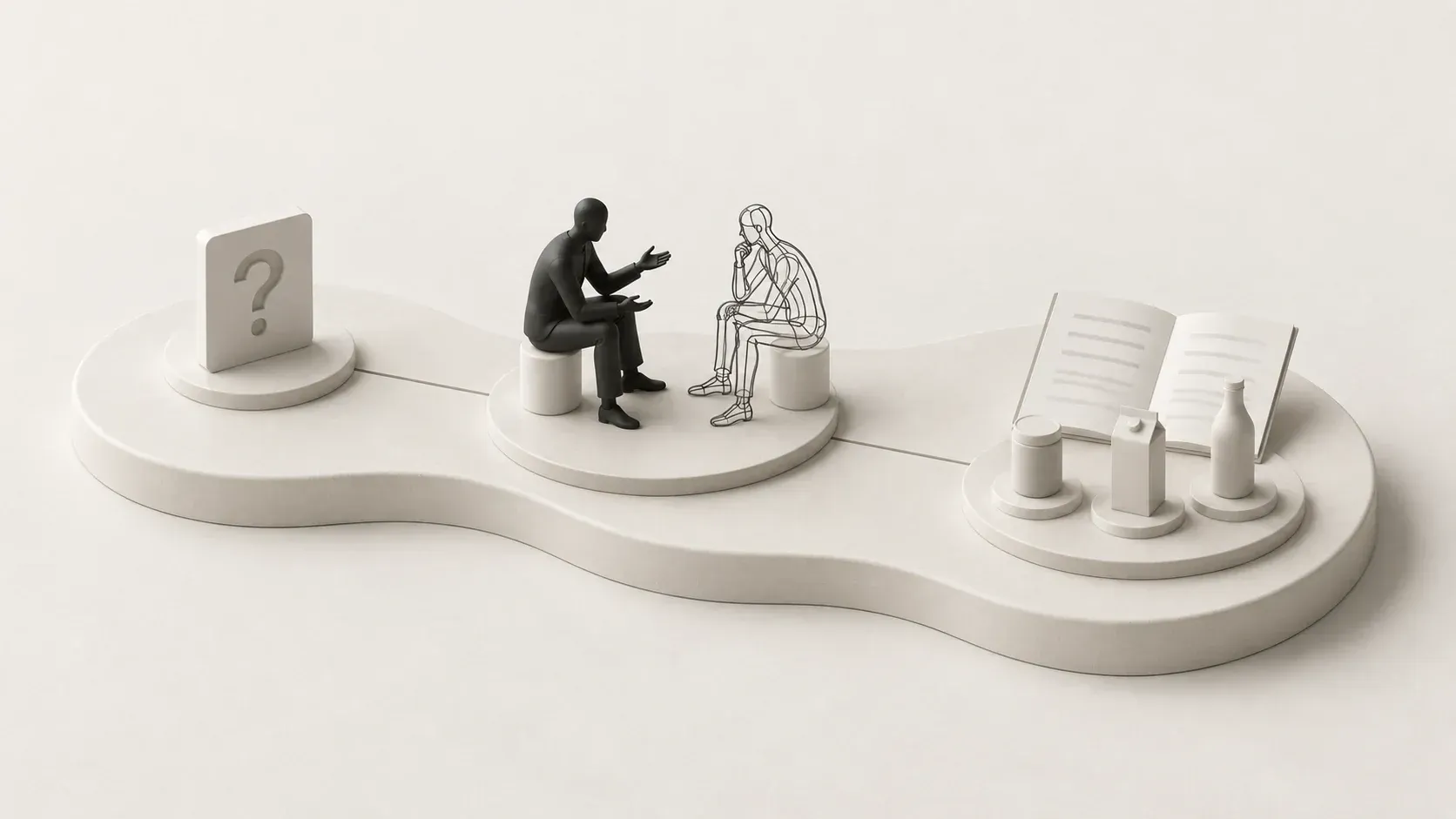
Claims testing evaluates how intended buyers understand, believe and value a product promise. Researchers show a claim in its real context, compare alternatives and examine interpretations, helping teams choose supported wording that communicates the intended benefit and avoids unintended promises.
Your pack says “Easy to clean.” One buyer thinks the corners are easy to reach. Another hears dishwasher-safe. A third expects the plastic never to stain. The words are short; the resulting product promises are not.
The study reveals the promise buyers hear; product evidence shows which promise the product can deliver. Bringing those answers together helps you retain the wording, narrow the promise or replace it.
For a reusable or returnable proposition, our sustainability market research guide separates claim interpretation from the return, cleaning and reissue conditions that an environmental assessment must examine. Those conditions can change the offer and the first study to commission.
Monadic claims testing versus MaxDiff
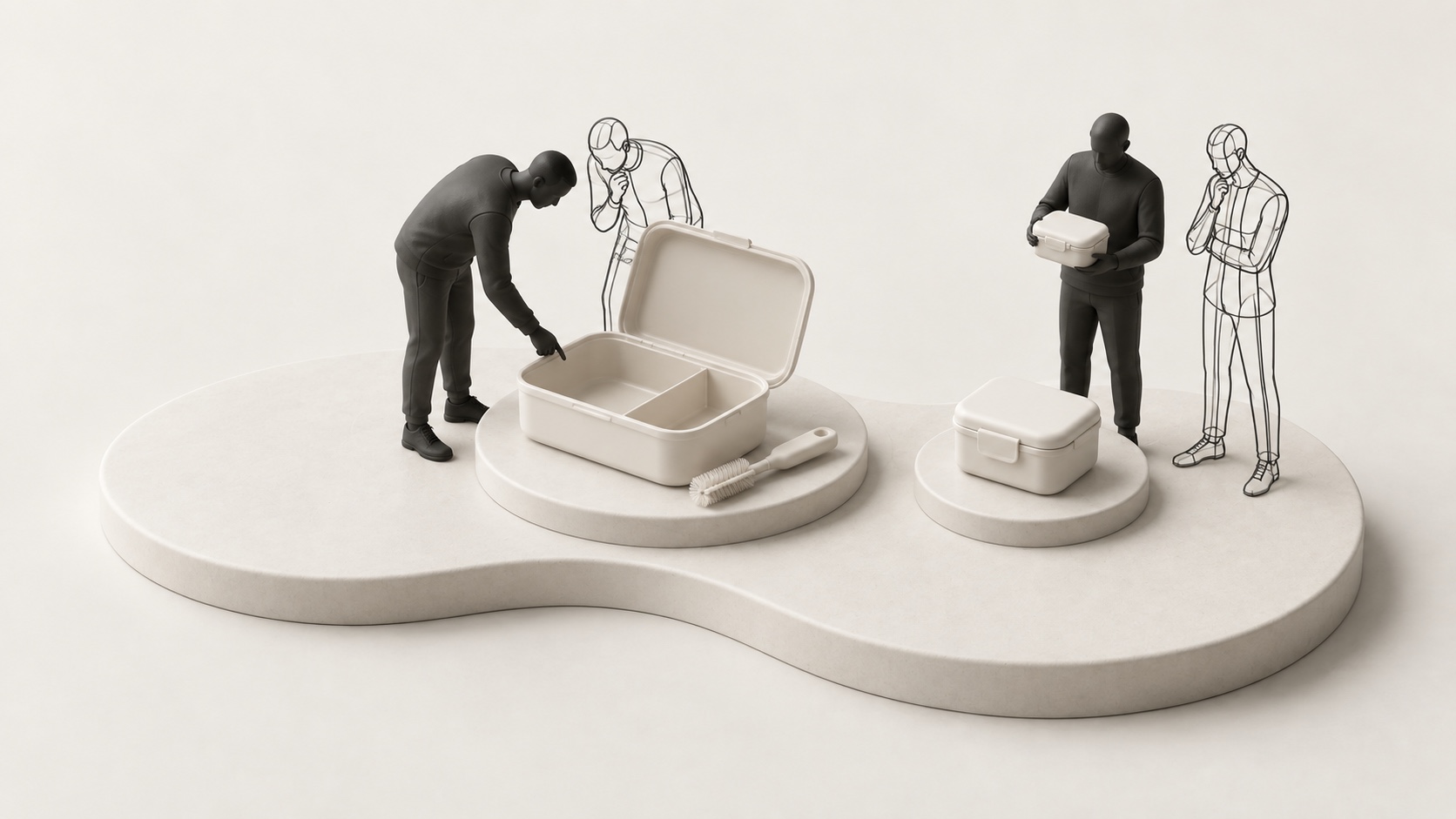
For the lunch container below, first check what buyers understand by “Easy to clean.” A monadic study assigns each buyer one matched pack version and compares interpretations, credibility and appeal across groups. Use MaxDiff later if several understood, supported benefits compete for the lead: buyers choose the most and least compelling statements from balanced sets. Its relative priorities do not establish that any claim is understood or substantiated.
Decision | Study and usable output |
|---|---|
Does the cleaning line add a dishwasher-safe promise? | Monadic claim versus control: compare unaided interpretations with each arm’s valid base. |
Which supported benefit deserves the headline? | MaxDiff: prioritize the understood cleaning, material and storage benefits within the tested list. Keep wording, design and audience visible. |
Our MaxDiff guide explains the relative-priority design; our monadic testing guide explains independent exposure.
A claim matrix separates the message from its support
Imagine you sell a lunch storage container to buyers who want easier everyday cleaning. In this illustrative example, you need to choose a claim that communicates the supported benefit without adding a promise the product cannot meet.
Candidate and intended meaning | Interpretation and product evidence |
|---|---|
“Made with 40% recycled plastic”: stated proportion of material | Interpretation to investigate: The entire pack is recycled or recyclable Product evidence to check: Verified material composition and scope |
“Keeps your lunch fresh”: useful storage experience | Interpretation to investigate: It prevents spoilage or extends a specific shelf life Product evidence to check: Performance evidence for that precise promise |
“Easy to clean”: convenient cleaning | Interpretation to investigate: It is dishwasher-safe or stain-proof Product evidence to check: Supported use, care and performance conditions |
The interpretations listed under “Interpretation to investigate” are hypotheses about what buyers will read into each line; the test is there to check them.
View an example study to inspect the audience, offer and findings before planning your own.
Unaided explanations come before ratings
Show the claim in its actual context, including nearby imagery, qualifiers and other pack copy. A disclaimer separated from the headline may be less visible than it is in a clean research slide.
Use these probes:
- What does this statement mean to you?
- What would you expect the product to do because of this statement?
- What would you not expect it to do?
- Which part, if any, is unclear?
- What makes the statement believable or doubtful?
- What information would you look for to check it?
- Does this change whether you would consider the product? Why?
Code the interpretation before calculating agreement. “I believe it” does not tell you which inferred promise a person believes.
One phrase can create three different promises
For “Easy to clean,” the same sentence could create three different promises:
What the buyer might say | Meaning and next action |
|---|---|
“I can reach the corners with a sponge.” | Meaning and evidence to check: Accessible shape: check the actual opening and cleaning task Next action and owner: Product design verifies access; marketing writes precise copy. |
“I can put it in the dishwasher.” | Meaning and evidence to check: Dishwasher safety: check the supported care instructions Next action and owner: The care-evidence owner verifies the condition; marketing clarifies unsupported implications. |
“It will never stain.” | Meaning and evidence to check: Stain resistance: check the material evidence and its scope Next action and owner: The material-evidence owner reviews the promise; marketing narrows the wording and retests. |
Read the meanings before averaging credibility scores. A believable statement can still communicate the wrong promise.
Matched cards show which meanings the claim adds
The three answers above are reactions to an exposed claim. Without a comparison, you cannot attribute the dishwasher or stain interpretation to that wording: someone may already assume those properties from the category, image or container shape.
For an attribution question, randomize eligible people to matched cards with the same product, image and context:
Arm | Copy and evidence |
|---|---|
Neutral control | Copy that changes: “Lunch storage container” Evidence to compare: Baseline expectations without the cleaning claim |
Original claim | Copy that changes: Control plus “Easy to clean” Evidence to compare: Whether the claim adds unsupported meanings |
Concrete candidate | Copy that changes: Control plus “A wide opening helps you reach the corners while washing” Evidence to compare: Whether the mechanism preserves the intended meaning and reduces unintended ones |
Ask every arm “How would you expect to clean this container?” before mentioning a dishwasher or stain resistance. Code unaided answers using the same blind rubric and show each arm’s base. Then collect detailed diagnostics. For example, a control answer might say “I would check the care label,” while a claim-arm answer might say “Probably dishwasher-safe.” That contrast defines a hypothesis to test; two example answers do not establish a measured increase. If the study uses only exposed reactions, report interpretations descriptively and investigate prior expectations in follow-up.
Each inferred promise needs an owner
The container example produces a useful handoff only when the interpretation reaches the right team. Marketing owns the wording and visual hierarchy. Product owns the care instructions and evidence for the material or cleaning method. The appropriate review team checks whether the final statement and support fit the intended market. Put those responsibilities beside the actual inferred meanings rather than deliver one average credibility score.
For the concrete candidate, a buyer explaining that the opening gives a sponge access to the corners is responding to the stated mechanism. A buyer inferring dishwasher safety is adding a different property. Keep those meanings separate even if both people rate the line believable. The next comparison should investigate whether the revised wording communicates washing access while keeping care conditions clear.
Use the complete final pack image for this decision. A headline, a dishwasher icon and a small care line form one encounter. Removing the icon only in the survey would test a version the buyer never sees. Save the pack version, the arm and the open answer so the recommendation can point to the actual element to change.
The container’s interpretation study
Your brief for the container is specific: compare the neutral product card, “Easy to clean” and the wide-opening explanation under matched exposure. Record unaided expected cleaning methods, then ask which visible cue supplied that expectation. The proposed action is to replace the broad line if the specific mechanism is understood and the broad version adds a material unsupported meaning.
The same approach applies to a software claim such as “Set up in minutes.” Define what setup includes, which buyer and environment the promise addresses, and what product evidence supports the actual wording. Consumer interpretation helps identify what people expect the clock to cover. It does not supply the product performance record.
Clear claims still compete for the lead
Once the wording is understood and its support checked, you may still have several benefits competing for one headline. For the container, the next comparison could be the wide-opening explanation versus “Made with 40% recycled plastic.” The material statement only enters this comparison after the composition records and the wording’s scope have been checked. This second test asks which supported benefit deserves the prominent space.
A buyer who hand-washes lunch containers may value access to the corners. Another may care more about the material. Neither answer is supplied by showing that both lines are clear. The research needs to connect each benefit to a reason for choosing this container at its actual price.
Randomly assign eligible buyers from the same intended audience to one complete pack version each. Keep the product, brand, price, image, headline space and exposure conditions matched; change the candidate claim. Ask for the unaided explanation first, then collect the same ratings for each version. SurveyMonkey’s message-testing guidance also separates clarity, credibility, relevance and uniqueness. Those measures answer different questions, so keep their results separate.
Measure | Question and interpretation |
|---|---|
Relevance | “How relevant is this benefit to the way you use a lunch container?” A clear claim may describe a benefit this buyer doesn’t need. |
Credibility | “How believable is this statement about this container?” Follow with “What makes you say that?” This reveals doubt or a reason to believe; it doesn’t verify the product claim. |
Stated interest | “At the price shown, how likely would you be to consider buying this container?” This measures stated consideration under the test conditions. |
Use the same fully labeled scale for each measure in every arm. For example, relevance could run from 1, “not at all relevant,” to 5, “extremely relevant.” Decide how you’ll summarize the scale before collecting responses. Show the full rating distribution and the number answering each question; a mean alone hides whether the audience agrees or splits. Keep unanswered questions visible and identify whether the responses came from people or a modeled audience.
Choose the buyer groups before seeing which claim wins. For this example, cleaning habits are a useful cut: regular hand-washers and buyers who rely on a dishwasher may want different benefits. Keep the base beside each group’s result. A small group with a strong average is a reason to investigate, rather than a reliable segment recommendation.
The decision follows from the pattern. If the cleaning line is understood but irrelevant to the intended buyers, making it more prominent won’t solve the missing benefit. If a material claim is attractive because buyers infer that the whole container is recyclable, return to the interpretation and evidence check. A lead claim needs a relevant benefit without depending on an extra promise.
If the pack has room for two claims, compare the complete pair with the strongest single-claim version. Conjointly treats individual claims and claim combinations as separate testing jobs. Two popular lines may repeat the same reason to buy or compete for attention; their individual scores don’t show what the combined pack communicates.
A randomly assigned neutral pack version without the candidate claim can help answer whether adding that line changes stated consideration under matched exposure. Even then, a survey response isn’t a sale. For a live listing or campaign, a later controlled test of the final creative can measure observed clicks or purchases using the same offer and a defined comparison.
Qualifiers belong in the real encounter
A qualifier that works on a research slide may be absent from a cropped ecommerce image. Compare the final headline and nearby explanation together, then ask the participant to paraphrase the total promise. Ask what information supported that interpretation without pointing to the qualifier first.
If the headline still creates an expectation the evidence doesn't support, moving a caveat lower on the pack won't fix it. Revise the main wording or presentation and check the actual candidate again. Interpretation evidence informs that edit; product and legal review determine whether the supported statement can be used in its intended jurisdiction.
The lead claim has to be clear, supported and worth choosing
A wide opening helps you reach the corners while washing.
For the container, this is the next candidate when washing access is the supported benefit. Put the wording beside the actual pack image and cleaning instructions. If the main attraction still comes from dishwasher safety, the next change belongs in the prominent wording or visual context. A small-print correction will not do the communication work of a clear main claim.
A more precise line can change whom the product appeals to. The wide-opening candidate sells easier hand-washing. If your buyers mainly want dishwasher convenience, the next question concerns the product or intended audience. Keep that choice separate from whether the sentence is understood.
Retain a claim when its important interpretation matches the supported promise. Narrow it when a qualifier or concrete mechanism resolves the ambiguity. Replace it when the main attraction depends on an unsupported inference.
The FTC's advertising-substantiation policy explains why support for objective advertising claims matters. Regulatory and legal review should address the actual product, evidence and jurisdiction; an interpretation study cannot replace it.
With Vensia, our team builds a data-grounded synthetic audience, runs the claims comparison and returns an interactive report with modeled responses, segment differences and a recommendation for the wording.
For the container, our report should show what each line communicates, which buyer groups value the supported benefit and which wording deserves the lead. A cleaning claim that depends on dishwasher safety goes back for revision. A clear hand-washing benefit that matters to the intended buyers can move to the final pack test. Keep the product evidence and the appropriate review beside that recommendation.
Book a demo to discuss the claims on your pack or campaign. For the surrounding design, see our packaging design testing guide; for a broader campaign promise, see our message testing guide.