
Water utilities customer research: put the service plan and bill together
Commission a study of the complete service-and-bill package. Keep support for a water utility’s plan separate from reported difficulty managing the household bill.
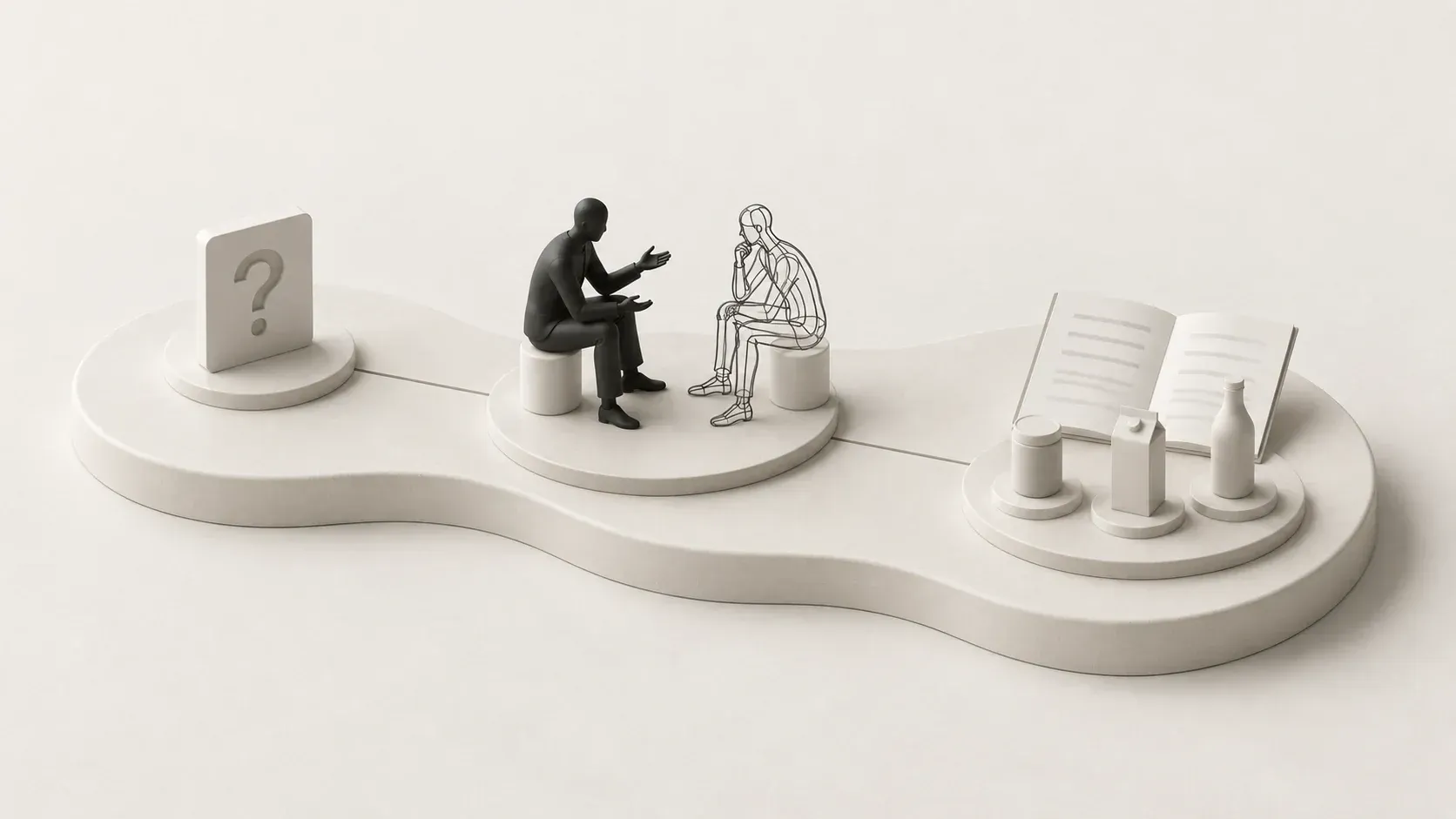
Water utilities customer research helps planning teams understand service needs, investment choices and their consequences for households. For a utility choosing the sequence of interruption and sewer-overflow improvements, the study must present the service change with the bill attached to it. Customers can support the improvement and still struggle with that bill.
Research can inform the service plan, its timing, practical support and the explanation customers receive. Those decisions differ from choosing a voluntary product. If households depend on the supplied network, declining the proposed improvement does not necessarily let them decline the underlying bill.
Choose a research partner that can investigate that whole situation. The brief should connect feasible service changes with their household consequences, then keep acceptance of the plan separate from ability to manage the proposed bill.
The company’s open choices define the brief
Consider Shorewater, a fictional water utility preparing a household service-investment plan. The program options and possible customer responses below form a worked commissioning brief.
In this case, households use the local network and cannot simply select another household supplier. Shorewater's technical and policy teams have already defined the work that must proceed. The research does not offer customers a vote on removing that baseline.
The open decision concerns the sequence of additional feasible improvements. One program addresses recurring supply interruptions earlier. Another brings forward work intended to reduce sewer overflows. The planning team supplies the expected service changes, delivery periods, uncertainties and household bill profiles for each program. It must also explain what happens if neither additional program proceeds.
The research partner's job is to help the team understand those choices and their consequences for customers. It cannot turn an unfunded promise into a feasible option or establish an engineering outcome through an opinion survey. Resolve those inputs with the people responsible for them before showing a plan to participants.
Our market research services guide explains how to commission work around a decision and the evidence needed to make it. For a water-utility engagement, specify the service-plan choices the findings can influence, who owns each choice and which conditions the research must treat as fixed.
Present an improvement with the bill that belongs to it
Shorewater initially proposes asking customers to rank the two improvements, followed by a separate question about willingness to support investment. That would leave the planning team unsure whether people had considered the relevant household consequence when giving their preference.
Instead, commission materials that let customers understand a complete, feasible program. State the starting service, the proposed change, when people could expect it and the corresponding bill path. Explain whether a displayed amount is the whole bill or an addition to it, and which period it covers. The company's qualified team should verify those facts and the assumptions behind them.
Check the materials with intended participants before the main study. Ask people to explain what would change for their household and what the bill information means. Someone may read a multi-year increase as a one-time payment or assume the improvement is already included in their present service. Revise unclear material before treating a rating as a response to the intended package.
CCW’s May 2025 review of PR24 research guidance describes work on investment preferences and the affordability and acceptability of proposed business plans. It reviews research for the 2025–2030 planning period in England and Wales and discusses learning for a later review. Use it as a regional example of the research problem; establish the applicable expectations for your own engagement.
Keep the presentation balanced. Explain the service consequences of each feasible option, including uncertainty and any relevant alternative. Repeatedly emphasizing an attractive benefit while compressing the bill consequence into a footnote would give the participant a different decision from the one the planning team needs to understand.
Affordability and acceptability are separate answers
An acceptable service plan is not automatically an affordable household bill. A customer may value the improvement and still report that the proposed payment would be difficult to manage. Another may be able to pay but reject the proposed priorities, timing or distribution of benefits.
Ask about these dimensions separately and keep each person's answers connected in the returned data. Do not reconstruct the relationship by subtracting headline percentages. The following are possible response combinations, rather than observed Shorewater findings:
A customer's response | What the planning team needs to investigate |
|---|---|
Supports the plan and expects to manage the bill | Why the package works for this customer and which assumptions their answer depends on. |
Supports the plan but expects difficulty managing the bill | The burden, timing and relevant support question, without relabeling the customer as opposed to the improvement. |
Expects to manage the bill but rejects the plan | The service priorities, distribution of benefits, credibility or other reasons behind rejection. |
Rejects the plan and expects bill difficulty | Both concerns, with enough follow-up to understand how they interact. |
These answers guide different pieces of work. Reported difficulty can identify a problem the company needs to understand; it does not itself establish eligibility for a support program or predict which households will miss a payment. Those decisions need their appropriate evidence and responsible teams.
If a customer supports earlier interruption work but would struggle with the associated bill increase, investigate how the burden arises and which feasible change might address it. More persuasive descriptions of uninterrupted supply would not answer that question.
If the company proposes assistance, test a verified description of the actual support available, including the conditions that matter to the customer. An unspecified promise that help will exist cannot establish that this household could obtain it. Retain the distinction between acceptance of the service plan and acceptance under a particular support arrangement.
Households face different service and bill consequences
A general view of the plan can conceal different experiences. Shorewater needs to hear from customers affected by recurring interruptions, customers expecting benefits elsewhere in the network and people who report difficulty managing existing bills. It should also consider who receives, understands and pays the bill within a household.
Agree an audience and recruitment approach that fits the question. Explain how the provider will reach relevant groups, make participation accessible and retain the differences needed for interpretation. Someone who cannot attend a lengthy online discussion should not disappear from the planning team's understanding simply because the chosen format is convenient.
CCW's 2022 research on customer preferences emphasizes the customer consequences of decisions and identifies affordability, resilience and fairness as important considerations. For Shorewater, that suggests explaining what the proposed work means for people, rather than asking them to appraise infrastructure terminology they have not been equipped to assess.
Use qualitative work where the commission needs an explanation of a difficult reaction or a misunderstood choice. If the team needs a population estimate, agree a quantitative design and the limits of the intended estimates. A well-explained discussion with a small selected group does not supply the proportion of all households who accept the plan.
Our customer satisfaction research agency guide addresses a different commission: understanding an experience customers have already received and the changes it calls for. Existing service evidence can inform the planning study, but satisfaction with past service does not answer whether a future investment-and-bill package is acceptable or manageable.
For a different public-service planning question, our transport market research guide shows why an onboard passenger survey can miss people whose full travel day the current timetable cannot serve. Its intended travel market differs from the captive household customer base in this utility example.
A useful readout changes the next piece of work
Ask the provider to return more than a single support score. Shorewater needs the complete materials people considered, the wording and sequence of questions, the audience reached and an account of how the analysis connects the answers to the available decisions.
Returned evidence | Decision it should help Shorewater make |
|---|---|
Explanations of what customers understood, with the material version retained | Revise unclear service or bill information before relying on the response. |
Connected affordability and acceptability answers, with relevant group distinctions | Investigate a plan objection, a payment burden or both. |
Reasons for preferences among feasible programs and their timing | Revisit the open investment choices without treating support as an engineering assessment. |
Unresolved questions and the evidence needed to address them | Commission the next technical, household or communication work. |
The contrary case matters. Shorewater may have a fixed program that cannot be changed through this engagement. Then the brief should concern an honest explanation, practical support needs or implementation issues. Do not offer a choice the company will not honor and later describe the answers as customer authorization for the plan.
When genuine options remain, show how the evidence influenced them. The planning team may revise timing, seek a different feasible package or investigate a support arrangement. Where it retains the plan, it should be able to explain the reason and the concerns still requiring attention. The research supplies customer evidence within a wider decision; it does not make that wider decision disappear.
A complete package supports a useful modeled comparison
At Vensia, we build simulated audiences grounded in purchase, behavioral and research data. Your customer evidence and earlier research can add context. Our team builds the audience, runs studies and helps interpret how different groups understand an offer, compare alternatives and explain their responses.
Shorewater’s interruption and sewer-overflow programs need verified service and bill information before a modeled audience can compare them. Follow-up questions to the same modeled audience can explore how the programs or their explanations are understood in particular household situations.
Keep measured household affordability, engineering feasibility and any required human engagement attached to the evidence able to establish them. Modeled responses can inform the next customer-research question; they do not demonstrate that real households can pay a future bill or approve a utility's investment plan.
One support score would leave Shorewater unsure whether to revisit the plan, the payment burden or the explanation. In a Vensia discussion, use the feasible programs and verified bill paths to define separate returns for understanding, plan acceptance and reported bill difficulty. Relevant groups and reasons should stay attached to those answers so the next planning question is clear.