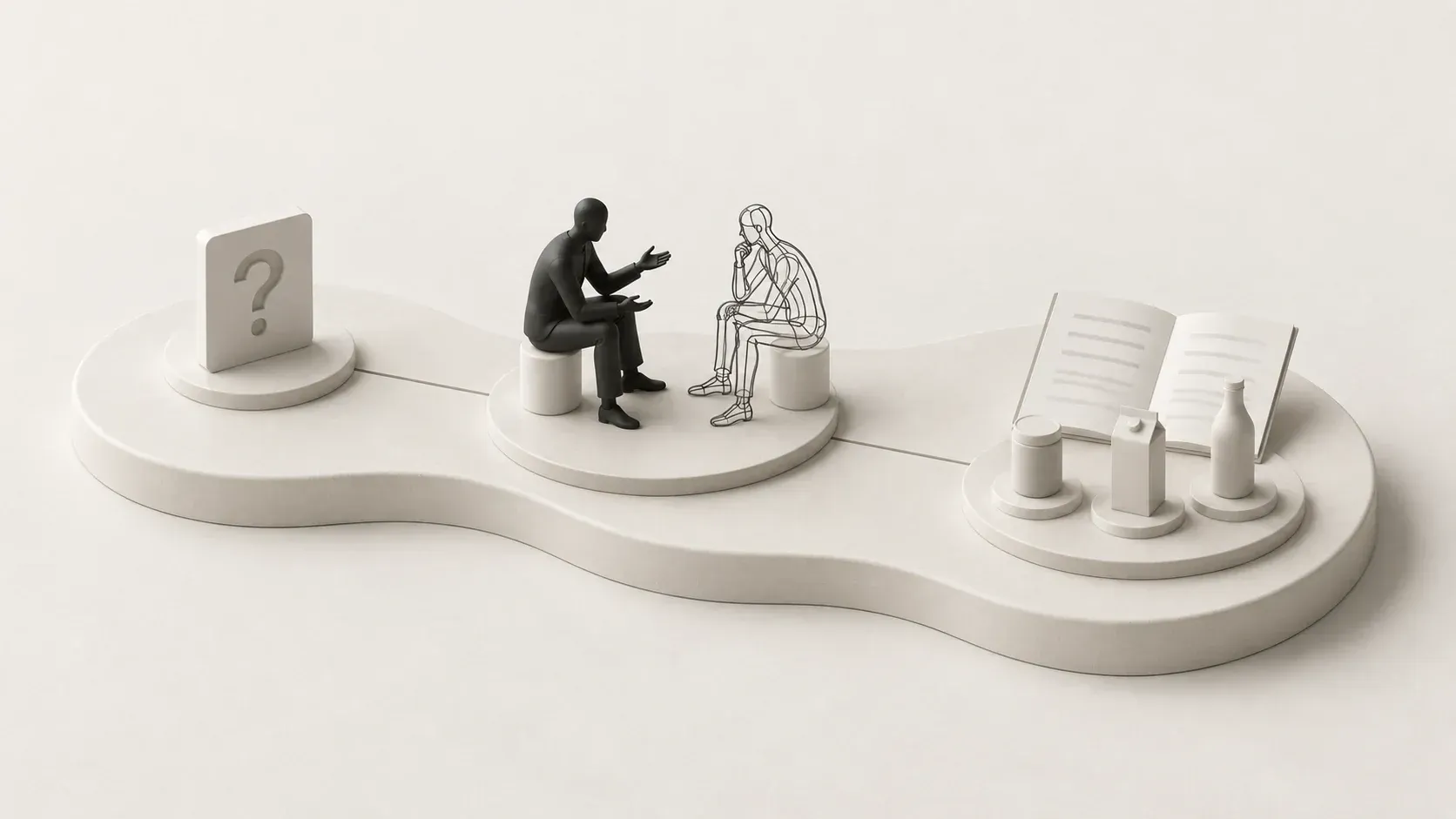
Vensia vs Outset: interviews, digital twins or an audience study?
Two desk-lamp concepts show when a fresh human interview, a person-linked twin or a modeled audience comparison answers the next question.
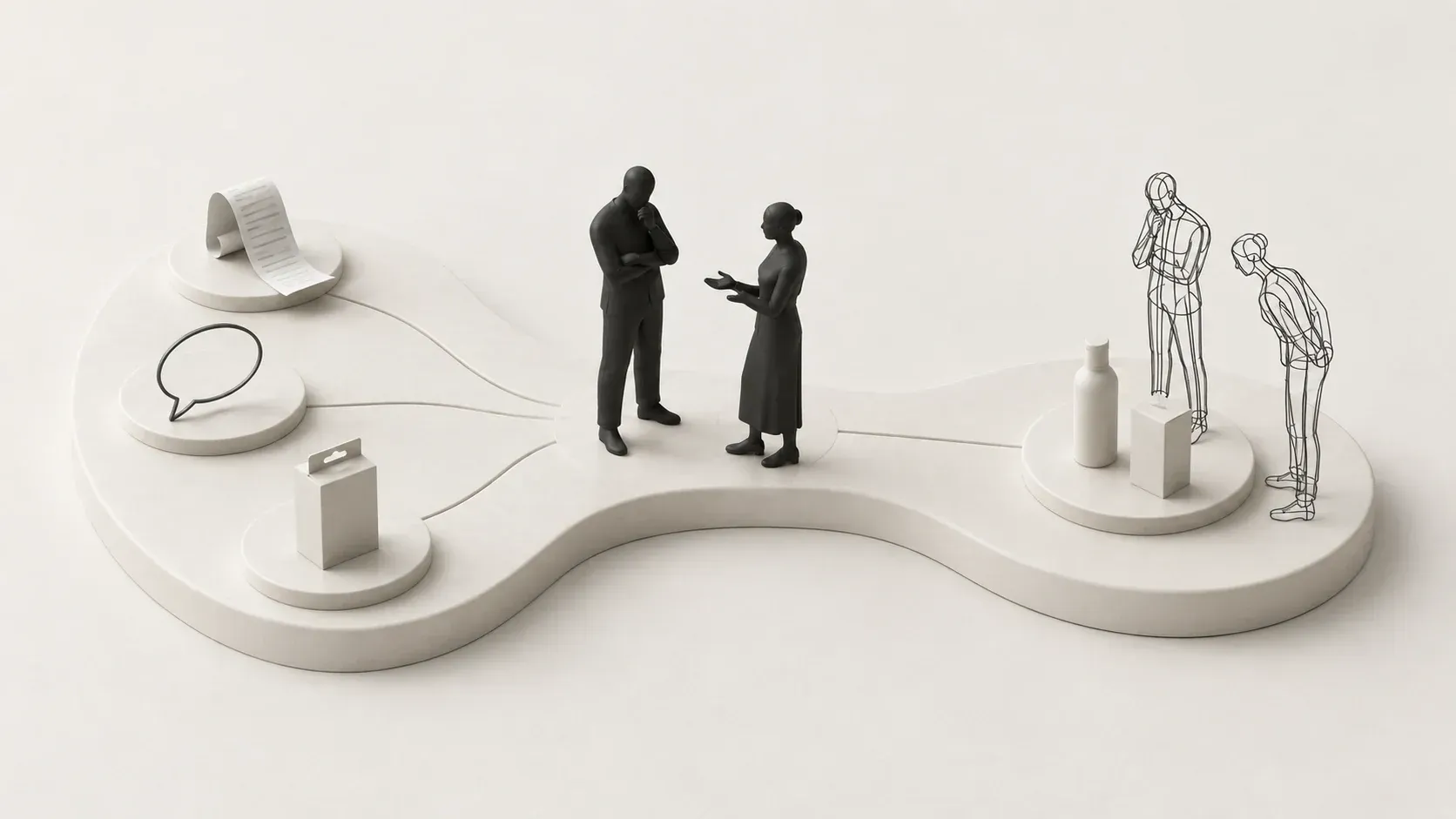
Outset offers AI-moderated human interviews and person-linked Digital Twins; Vensia runs studies with simulated audiences. The choice depends on whether you need a fresh account from a person, further exploration tied to that person or a comparison across buyer groups. A desk-lamp project makes the difference concrete.
About this example: the desk-lamp project is illustrative. The team is choosing between a clip-mount lamp and a weighted-base lamp for adults working in small, shared spaces. No prices, sample sizes or study results are assumed.
The workspace comes before the concept score
A clip mount may free up desk space, but the buyer needs somewhere suitable to attach it. A weighted base needs a place to stand. Before deciding which concept wins, the designer may need people to explain their actual workspace and what they already use.
Outset's interview offering uses AI moderation with follow-up questions and supports stimuli and different interview formats. Teams can bring participants or use recruitment help. This is a way to hear from people. The interview can uncover a constraint the concept card never mentioned.
Outset also offers Digital Twins, models linked to individual people and built from interviews. Its explanation of the approach describes refreshing those models with further human interviews. That creates a way to explore questions associated with an earlier participant between fresh studies.
Vensia builds simulated audiences using demographic, behavioral and research information, with customer data and past research able to add context. The team runs the study and interprets the findings. For the lamps, that can mean comparing concept reactions across the relevant buyer groups and investigating why the choices differ.
Three routes through the same lamp decision
Route | Work and evidence |
|---|---|
Outset human interviews | Work: People explaining their own workspace and reacting to the concepts Evidence: The recruited audience, questions, stimuli and original responses. |
Outset Digital Twins | Work: Further modeled exploration linked to people already interviewed Evidence: The underlying interviews, people represented, later modeled answers and need for fresh human updates. |
Vensia audience study | Work: A modeled comparison of the two concepts across a defined audience Evidence: The evidence behind the audience, complete concept cards, group differences and interpretation. |
These are different routes to useful research, not exclusive claims to concept testing. Outset can recruit an appropriate cohort for concept work. A Vensia audience study also needs evidence connecting its modeled groups to the intended buyers. Compare the proposed study, not just the product name.
The people missing from the audience stay missing
For a twin study, the relevant people must first be interviewed. If the cohort leaves out buyers whose desks cannot take a clip, asking its twins more questions does not add those buyers. Further recruitment may be the next task. That recruitment can include prospects as well as current customers.
For a population study, ask what supports the intended groups and their workspace differences. A large audience count is not an answer. The team needs to know whether the evidence can support the comparison it wants to make, and where an interpretation would reach beyond it.
Both routes need a defensible connection to the lamp buyer. One may begin with new interviews; another may begin with building and assessing a modeled audience. Keep that work and its cost in the scope.
What does the next question need to mean?
After the first presentation, the designer wants to know what happened when someone rearranged their desk. Marketing wants to explore a different message. Product wants to revisit the concept choice. Those requests should not all be filed under 'follow-up.'
What the desk-lamp team needs next | What the proposed work must establish |
|---|---|
A person's account of what happened after they rearranged their workspace | A fresh response from that person. Their twin's answer would remain a modeled answer. |
Exploration linked to a particular person's earlier interview | The connection between that interview, the person-linked model and its later output. Outset's twin route is relevant to this requirement. |
A comparison of concept reactions across the defined audience | The construction and coverage of the audience, the comparison being made and the limits of the resulting interpretation. Discuss this scope in a Vensia proposal and any competing study proposal. |
A new account of a person's experience needs a fresh response from that person. A twin's answer remains modeled. Keep the original human material separate from later exploration, and don't turn multiple model answers into additional recruited respondents. The synthetic and human research guide develops that source choice.
The demonstration should help the team change its mind
Ask to see how the proposed readout would help choose the lamp, revise it or stop. Can the team inspect why one concept appears stronger, whether important buyer groups differ and what unanswered question might reverse the choice? For a twin, return to the original interview. For a population study, examine the evidence behind the group comparison.
Ask both providers for validation relevant to the intended buyers and research task, then inspect the responses behind a finding. Research support and follow-up questions belong in both proposals; agree what each team will do.
A useful demonstration may reveal that neither lamp is ready. Perhaps the mount needs a different surface or the base takes too much space. That is worth learning before treating either concept as a winner.
Use the research brief template to keep the audience, concepts, returned material, validation, total fee and division of work comparable. The market research companies guide places that complete engagement alongside other delivery options.
Which work should happen next?
Choose a human interview route when the next answer needs to come from a person's actual workspace. Consider a person-linked twin when the next exploration should connect back to someone already interviewed. A modeled audience comparison fits the question of how the two concepts fare across relevant groups, with an interpreted readout the team can explore further.
For related approaches, the AI focus groups and interviews guide distinguishes people from generated answers. Our accuracy article is the place to inspect Vensia's published comparisons. The existing comparisons with Aaru, Evidenza, Simile and Lakmoos cover other study choices.
If the team still needs to hear how people use their desks, begin there. The right next answer should change what the designer does.