
13 AI Market Research Tools in 2026, Compared by Research Job
Compare 13 tools by research job, response source and total cost. A published Vensia study of a foldable iPhone shows how to inspect modeled offer choices and their bases.

AI market research tools help teams run studies, investigate customer evidence or analyze an audience, but they return different kinds of answers. Choose between modeled comparisons, interviews, surveys and existing-evidence analysis according to the decision, then compare the audience, deliverable and total study cost.
Updated October 21, 2026: revised research navigation and the study guidance on this page.
Your team has three campaign ideas, a new price to test or a customer problem to explain. The right AI market research tool should help you choose what to do next. Start with the output you need: a comparison of customer choices, interviews you can inspect, or an analysis of evidence you already have. Then compare the audience, deliverable and total study cost.
Compare the tools · Inspect a sample output · Explore a Vensia study
Compare the full cost of a usable study, including recruitment, research support and deliverables. A quoted subscription, free tier or trial may cover only part of that work.
Ready to scope a study rather than compare software? Explore Vensia’s AI market research platform. This guide compares the different research jobs the tools cover.
Method, pricing and turnaround at a glance
This unranked summary follows the research jobs in the guide. Public offers were checked October 24, 2026. Timing statements describe the named vendor workflow; confirm the complete scope, sample or model setup, analysis and revisions in the quote.
Provider | Method, commercial model, timing and fit |
|---|---|
Method / source: AI-moderated interviews collect new human answers; Digital Twins are later modeled answers grounded in one interviewed person | |
Method / source: AI-led interviews with recruited human participants and source-linked reporting | |
Method / source: AI-moderated human video interviews, recruitment and synthesis; self-service and managed-research scope differ | |
Method / source: Existing customer records/research repository; Digital Twins model accounts/segments using connected first-party evidence | |
Method / source: Analysis of connected existing customer feedback, tickets, calls and reviews | |
Method / source: Human survey/panel workflows; Edge Audiences generates a separate synthetic response base | |
Method / source: Human fieldwork and synthetic Category Twins are separate available workflows; confirm which the study uses. | |
Method / source: Human survey and AI-interview participants through Measure/Explore; researcher support | |
Method / source: Syndicated human-survey data; Synthetic Audiences generate modeled answers grounded in those data | |
Method / source: Existing public online conversation and optional enterprise-held evidence; AI-assisted analysis | |
Method / source: Estimated digital behavior/traffic intelligence derived from multiple data sources | |
Method / source: Source-linked analysis of public data for self-serve; connected internal/syndicated/external sources for enterprise | |
Method / source: Modeled populations, not newly recruited human survey respondents. |
A subscription, response charge and custom engagement buy different work. Our market research pricing guide shows how to compare the total commitment and included deliverables.
AI market research tools at a glance
AI involvement doesn't identify who supplied the answer. The table keeps the research job first, then shows the evidence source and decisions you still own. A managed service can do implementation work for you; agree responsibility in the quote rather than assuming the software subscription includes it.
Tool | Use it when you need Evidence source and buyer-owned work |
|---|---|
AI interviews with researcher control Evidence: Human answers in the AI-moderated interview workflow; later Digital Twin answers are a separate modeled source. Your work: Approve the guide, stimuli and participant criteria; agree who recruits and reviews the source interviews. Scope twins separately. | |
Recruitment, interviews and reporting in one workflow Evidence: Recruited people's interview responses, with findings connected to the source material. Your work: Approve eligibility and the study brief, confirm included recruitment and research support, and check the interviews behind the recommendation. | |
Video studies with research support Evidence: Participants' video interviews, through the self-service or managed-study route described below. Your work: Choose the service level, approve the stimulus and audience, and include design and recruitment in the complete schedule and quote. | |
Finding and reusing existing research Evidence: Existing recordings, transcripts, surveys and feedback in the repository workflow. Its Digital Twins offering needs separate scope. Your work: Supply or connect permitted records, check whose experiences they represent and decide what new audience evidence is missing. | |
Continuous customer-feedback analysis Evidence: Connected feedback such as support, sales, reviews, surveys and calls; coverage depends on the sources available. Your work: Define the issues and customer groups, confirm source coverage and context, and decide who owns the resulting product or service change. | |
Survey programs with enterprise workflows Evidence: Human survey responses for the panel route, or modeled responses for Edge Audiences. Keep the two bases identifiable. Your work: Specify the product, instrument, method and audience; separate platform, sample and service costs. The listed subscription doesn't establish Edge pricing. | |
Recurring consumer studies and advanced methods Evidence: Human survey responses for panel studies; Category Twins is a separate modeled route grounded in brand-tracking data. Your work: Agree the audience, study design and sample costs, and verify that the plan includes the required advanced method and support. | |
Consumer surveys connected to AI interviews Evidence: Recruited participants' survey and interview responses through Measure and Explore. Your work: Approve eligibility and the question set, check qualifying bases and credit use, and agree how research support will interpret the result. | |
Audience profiles from recurring consumer surveys Evidence: Retrieved recurring-survey findings, or new modeled answers through Synthetic Audiences. These are different outputs. Your work: Check market coverage, original questions, fieldwork dates and segment bases; for modeled work, also assess grounding and relevant validation. | |
Monitoring public online conversation Evidence: Accessible online discussion, with first-party data also supported in the described workflow. Your work: Define queries, sources and periods, check who posts or is missing, and avoid treating mention volume as representative demand. | |
Comparing competitors’ digital activity Evidence: Estimated digital activity such as competitor traffic, engagement and acquisition channels. Your work: Choose domains, geography and period; inspect coverage and keep external estimates separate from first-party analytics and reasons for purchase. | |
Source-linked consumer and market briefs Evidence: A source-linked synthesis of the connected internal, consumer, syndicated and public material available to the brief. Your work: Specify the question and permitted sources, inspect dates and citations, and check whether the evidence actually covers the intended audience and offer. | |
Complete qualitative, quantitative and predictive research using a data-grounded synthetic population Evidence: Modeled responses from a data-grounded synthetic population, returned with analysis and recommendations in the agreed study. Your work: Approve the audience, complete alternatives and decision; agree grounding, validation, deliverables and which next question needs human or transaction evidence. |
For a specific selection, compare our concept testing tools guide or our consumer insights tools guide. Each starts with the research job and the work your team needs the tool or partner to complete.
Related guides: market research companies.
View an example study to inspect the audience, offer and findings before planning your own.
The same brief, two different evidence routes
Suppose a product team is choosing which message for a proposed coffee subscription should progress to a limited signup trial. It needs to know whether buyers understand the recurring offer and whether an objection concerns the message or the subscription itself. This is an illustrative brief, with no returned findings attached.
An AI-moderated human interview and a grounded modeled study are both plausible ways to investigate that choice. Send the same offer, audience definition and questions to each supplier. Ask the proposal to explain the audience basis, recommended answering base, allocation across cards, full cost and who will prepare the analysis. A shared brief makes the work comparable without making its evidence sources interchangeable.
One copyable brief
DECISION
Choose message A, message B or neither for a limited signup trial.
The study can recommend a revision if the complete offer is misunderstood.

AUDIENCE
US adults who bought whole-bean coffee online in the past 90 days
and help decide their household's coffee purchases. State how the
human eligibility or modeled audience will be supported.

FIXED OFFER
Two 250 g bags of whole-bean coffee for USD 24 before tax every four weeks.
Shipping is included. The subscription renews automatically.
The next delivery can be skipped or canceled until seven days
before its scheduled dispatch. No taste or quality advantage is claimed.

CARD A
Coffee without the planning.
Two 250 g bags for $24 before tax every four weeks, shipping included.
Renews automatically. Skip or cancel until seven days before dispatch.

CARD B
Two 250 g bags every four weeks for $24 before tax, shipping included.
You control renewals: skip or cancel until seven days before dispatch.
Renews automatically.

QUESTIONS, IN ORDER
Q1. In your own words, what would you receive and pay, and how
would the next delivery work?
Q2. What would you do next: subscribe, look for more information,
continue buying as you do now, not buy, or cannot judge? Why?
Q3. What, if anything, makes this offer difficult to choose?

COMPARISON
Preserve an initial response to one assigned card before any replay,
explanation or side-by-side comparison. Use the same offer, layout,
audience criteria and question order. Record the card and stage.
Keep the current buying routine and no purchase available as alternatives.

CODING AND RETURN
For Q1, code full understanding only when the answer correctly covers
both 250 g bags, the $24 before-tax four-week recurring charge, included shipping
and the seven-day deadline. Retain partial, contradictory, uncertain
and missing answers separately. Save the source text and coding reason.
Return the answer-level source log, card-by-audience readout and
decision memo described below. Don't turn next-step intention into orders.
These cards compare complete messages. They don't isolate the effect of a single phrase because the order and lead both change. If the team later needs to isolate one line, that is a narrower comparison with a new version saved.
Route one: AI-moderated interviews with people
In the Outset interview workflow, the AI moderator asks questions of recruited people. For this brief, the buyer approves the guide, the two cards, eligibility and initial-card assignment, then agrees who supplies participants and reviews the result. The accepted proposal should identify the human sample and the support included, rather than assuming software access includes the entire research engagement.
Ask the returned package to connect each reported misunderstanding to the person's initial answer and its recording or transcript. Keep the first answer separate from a later correct explanation after probing. A person might explain an existing coffee routine or name a subscription they canceled; that is a reported experience from an interview, with its source available for inspection. It still isn't a verified transaction record.
Accept this route's deliverable only when an authorized reviewer can trace a finding back to the relevant human answer, check eligibility and card assignment, and reconstruct the stated answering base. Reject a theme supported only by an unattributed generated summary or a later prompted answer presented as the first response. A small interview study can locate a misunderstanding without estimating its prevalence across the whole market.
Route two: a managed modeled study
In Vensia's population-study workflow, the team builds a data-grounded synthetic audience, runs the research and returns a report with responses, comparisons and recommendations. Give the team the identical coffee brief. Agree how available evidence supports recent online whole-bean buyers, what representation of each card the model receives and how initial tasks and later follow-ups will be separated.
Ask for the same source-log and card-readout structure, with every response labeled modeled. Request the audience definition, grounding and weighting notes, retained response bases and relevant validation for the intended task. If the available evidence cannot support the requested audience or condition, the proposal should narrow the claim or identify that gap before the work is sold as a match.
Accept this route's deliverable only when a reviewer can trace the recommendation to the supplied card, question, modeled answers and audience construction. A generated account of a coffee-buying routine is not a newly interviewed person's history. Don't accept a report that presents model responses as participant interviews or treats the size of its simulated base as proof of representativeness or behavioral accuracy.
The returned package has an inspectable shape
Agree these outputs in the proposal. They are requested deliverables, rather than a promise that every column appears automatically in a supplier's standard export.
Returned item | Exact content and acceptance check |
|---|---|
Answer-level source log | One row per answer: evidence source, study/card/question ID, audience or eligibility reference, initial or follow-up stage, answer text, comprehension code, coding reason and recording/transcript/response reference. A reviewer can open the source behind a claim. |
Card-by-audience readout | One row per card, audience and question: assigned base, retained initial-task base, answering base, each coded outcome and missing/uncertain counts. Reconcile exclusions and stages. Show next-step choices and objections on their own stated bases; don't merge them with comprehension. |
Decision memo | State A, B, revise or unresolved; identify the exact term understood or misunderstood, supporting source answers, conflicting cases, the message change and the next evidence needed. A forced winner isn't an acceptance criterion. |
For example, a recommendation to put the renewal and cutoff together must point to answers that misunderstood those terms, not merely a higher general liking score. If buyers understand both cards but reject recurring deliveries, another headline may not repair the offer. The buyer still owns whether to change the policy, test a different audience or stop the subscription proposal.
Choose the human route when the decision needs new accounts of people's actual experiences, with inspectable participant evidence. Consider the modeled route when the decision calls for exploring how a defined population may interpret and choose between complete offers, with appropriate grounding and validation. Neither route records signup conversion here. The final commercial question belongs in the limited trial with actual exposure, completed signup and payment records.
AI-moderated interviews: human accounts at scale
Shortlist Outset when researchers want detailed control over the guide, stimuli, and follow-up questions. Compare Listen Labs when you want recruitment, interviews, and reporting in one workflow. GetWhy fits a first video study with a choice of self-service or research support.
Outset: multimodal interviews with researcher control
Outset gives researchers control over the interview design while AI runs the sessions. Your team sets the guide, stimuli, logic, and follow-up questions for text, voice, or video interviews. Panel integrations or your own participant list supply the audience; transcripts, playback, clips, and reports let you work directly with what people said.
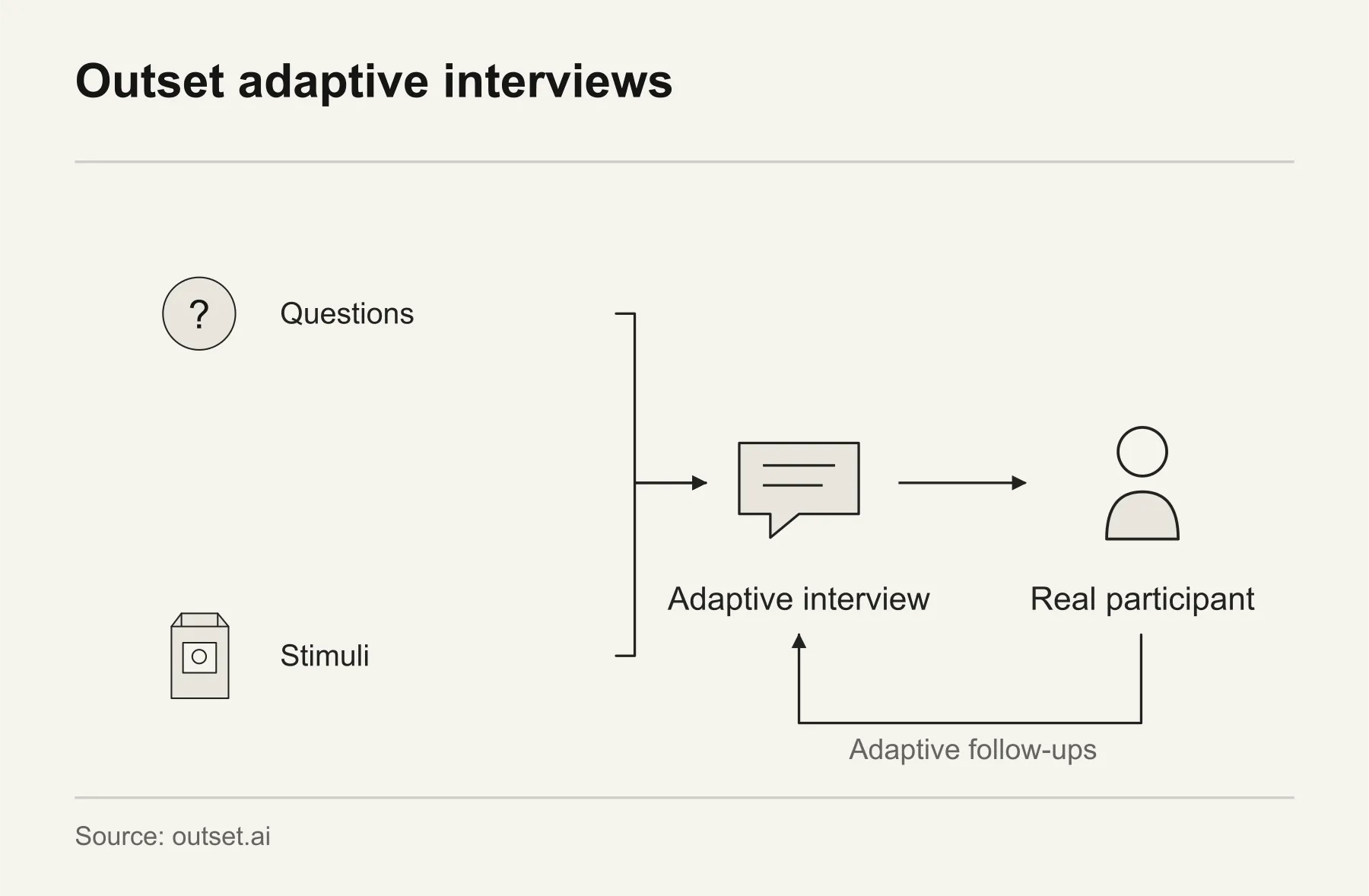
Outset’s guide editor shows how researchers set questions, logic, probes, and stimulus material before interviews begin.
Pricing · Contact sales. Confirm interview volume, recruitment, and research support in the quote.
Set the research objective, guide and stimuli, then define or recruit participants. In Outset's AI-moderated interview workflow, the responses come from people. Check recruitment quality, probing and the recordings behind themes before treating a recurring comment as a market-wide finding.
Outset also describes Digital Twins, where an interview with one real person provides the foundation for a twin that answers later questions. Its product page describes supporting human quotes, confidence scores and validation by the person grading the twin’s answers. Confirm access and the scope included in your proposal. Those later responses are modeled answers, rather than new interviews with the person.
Our Vensia vs Outset comparison examines human interviews, person-linked twins and a grounded population study for the same intended audience. It shows how recruitment or audience construction changes the work to commission and what the readout and later questions can establish.
Listen Labs: managing interviews from recruitment to report
Listen Labs puts recruitment, interviews, analysis, and stakeholder deliverables in one workflow. It fits teams spending more time coordinating suppliers than interpreting the work. Its moderator asks follow-ups, and findings link back to the source interviews.
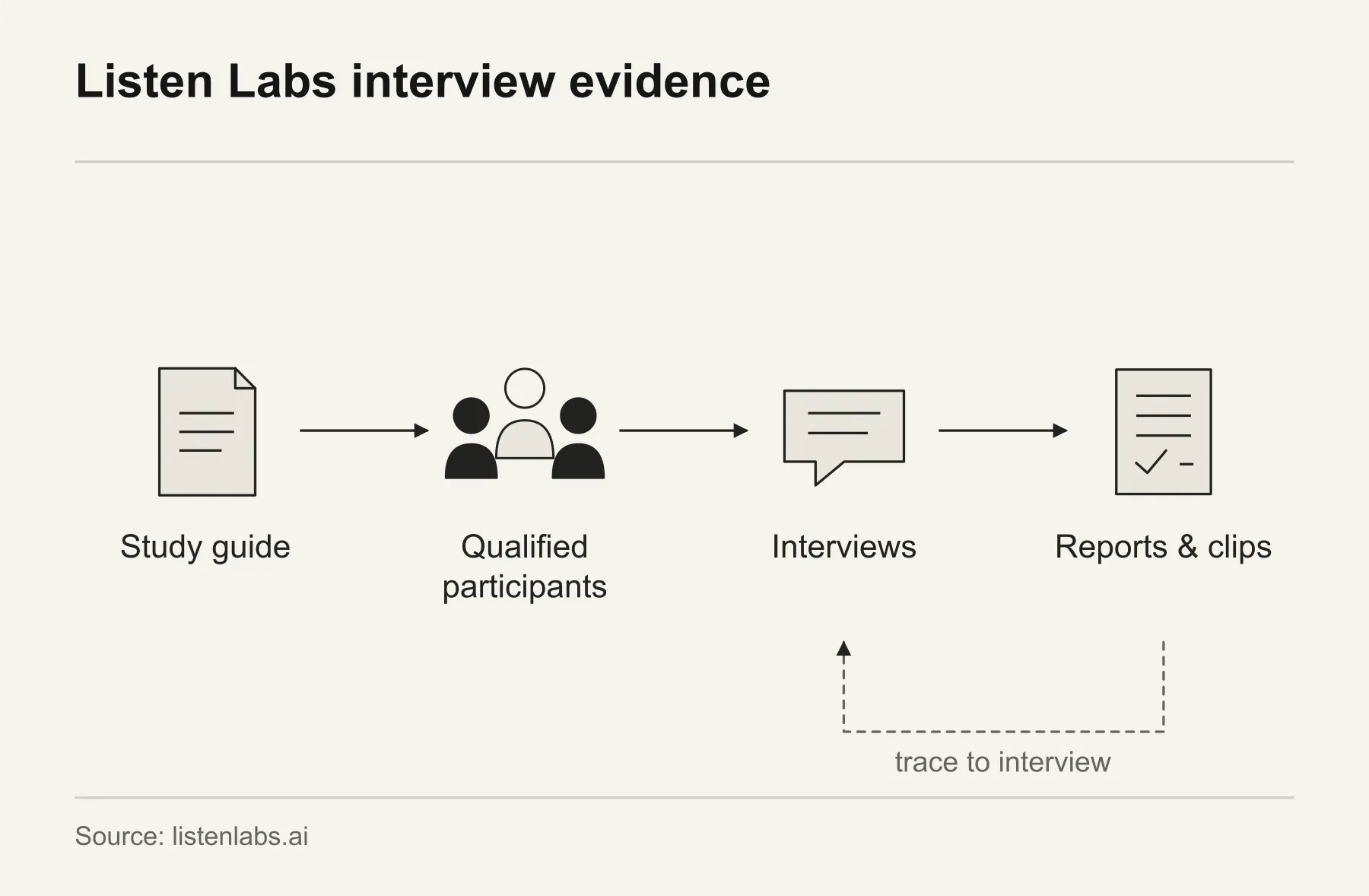
Listen Labs keeps completed interviews, screening results, and generated reports in the same study workspace.
Pricing · Contact sales. Compare the included recruitment, analysis, and deliverables, plus any annual commitment.
Supply a brief or interview guide, the intended audience and any concepts to show. Listen Labs collects human interview responses and connects findings to source material. Confirm recruitment criteria and the research support included in your engagement.
GetWhy: video interviews with research support
GetWhy runs AI-moderated video interviews as self-service software or a managed research engagement. Managed studies add study design, recruitment, analysis, video-backed reporting, and review by senior researchers.
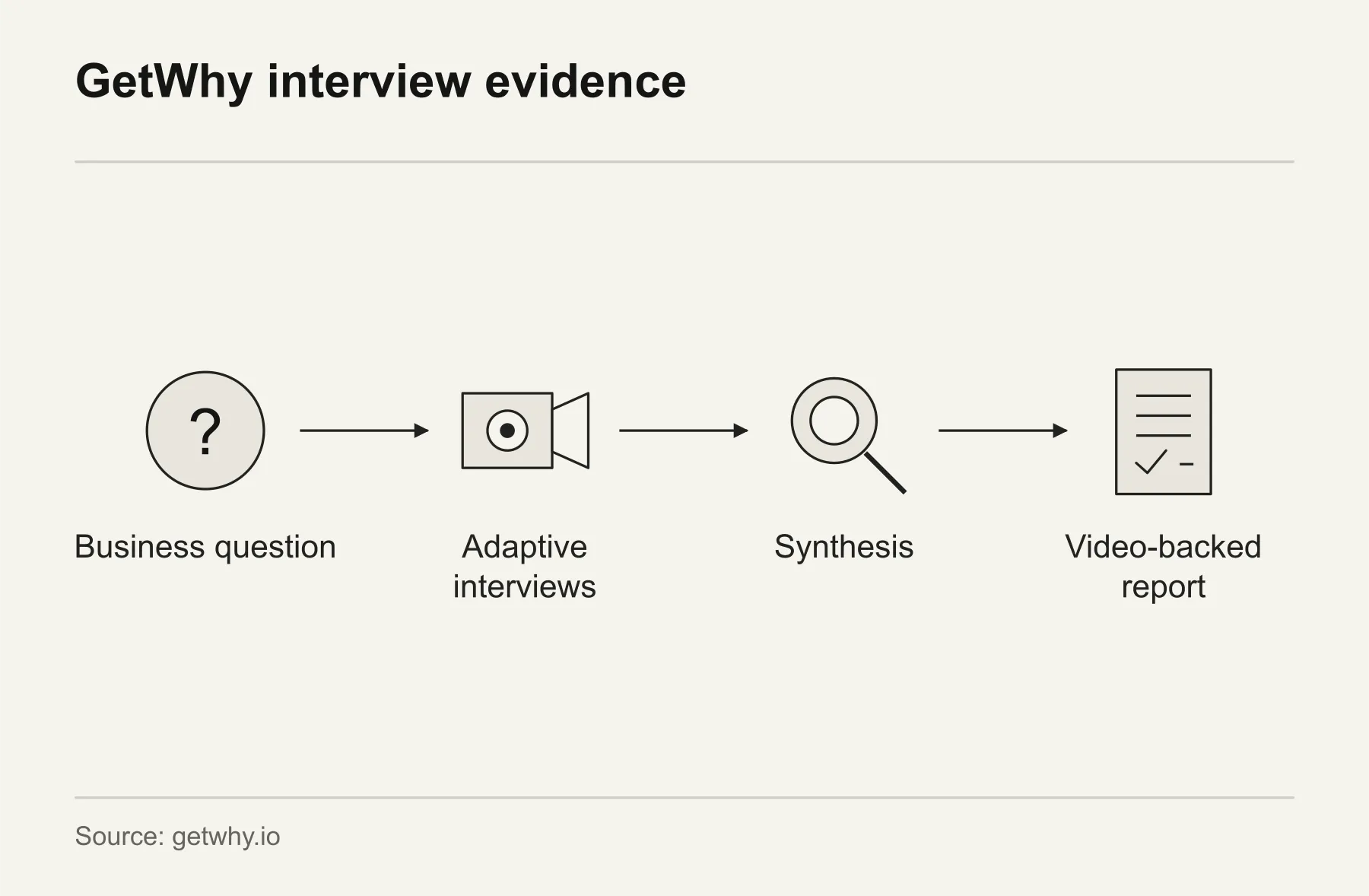
GetWhy turns a campaign brief and stimulus into an AI-moderated video discussion guide.
Pricing · GetWhy says initial studies start at $2,000–$4,000 without an annual commitment. Final price depends on audience, markets, interviews, languages, service, and deliverables.
GetWhy's managed-study 48-hour delivery clock starts after the first interview. Include study design and recruitment when comparing time to a usable result.
For agencies, recruitment specialists and interview platforms, compare our qualitative research companies.
Bring the decision, target audience and stimulus, such as a concept or campaign. The video responses come from participants. Agree who handles study design, recruitment and interpretation, and distinguish the advertised interview-to-report time from the full project schedule.
Customer-evidence tools: source-linked research and feedback
A new study is a poor use of time if the answer is already sitting in a sales call or support ticket. Dovetail helps researchers find and reuse that evidence. Enterpret tracks recurring feedback themes and connects them to customer context, including adoption and churn.
Dovetail: a shared research repository
Dovetail makes recordings, transcripts, surveys, feedback and prior studies searchable. Researchers can inspect the clips and records behind a finding, then share the evidence across the team. Enterprise capabilities include permissions, redaction and APIs.
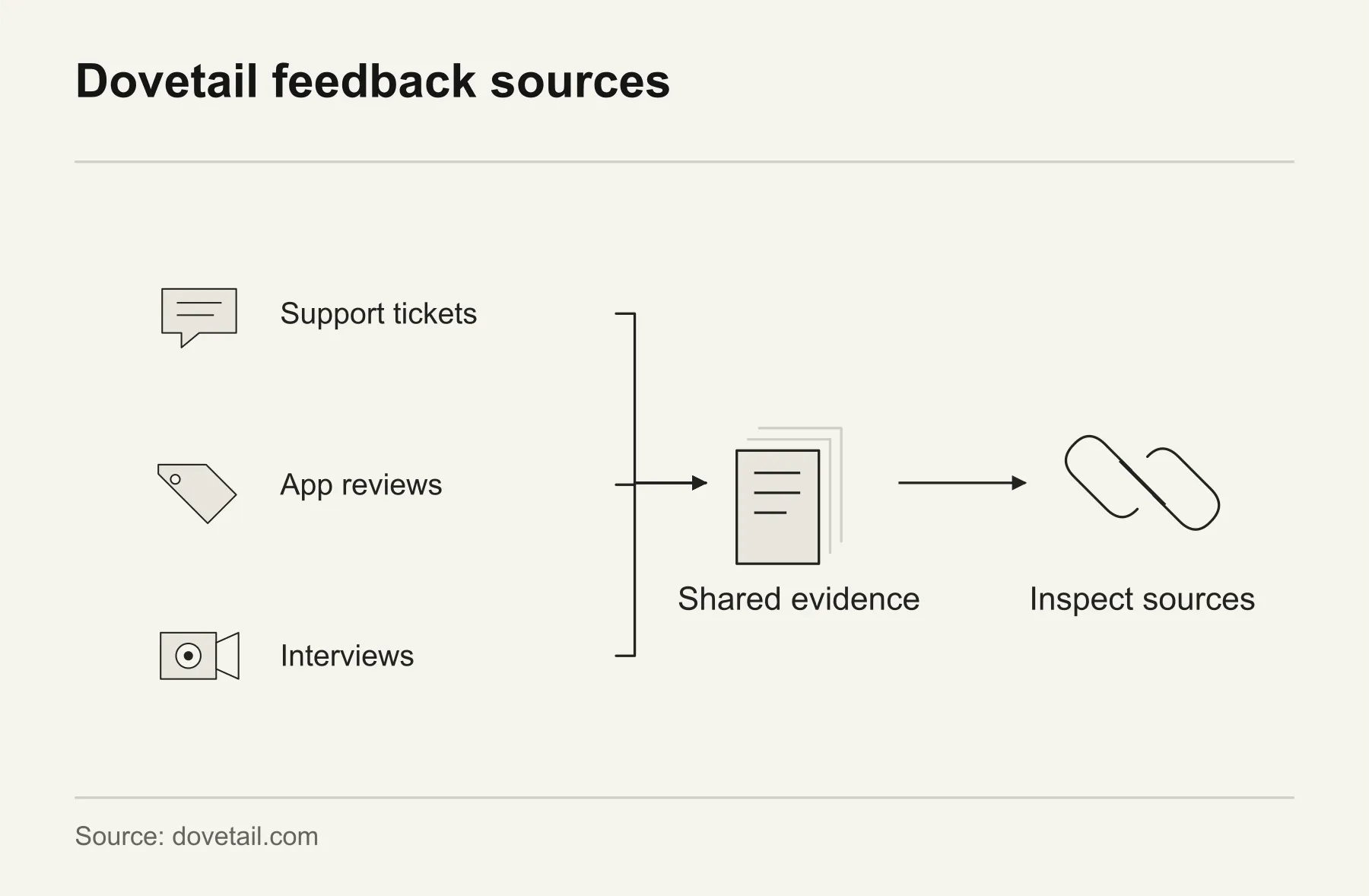
Dovetail’s Voice of Customer dashboard brings app-review ratings and support-ticket sentiment into one view.
Pricing · Dovetail’s free plan includes one channel, one project, and basic chat and summaries. Enterprise pricing is custom.
The repository reflects the people represented in your existing material. Research into noncustomers or a new audience needs additional evidence that represents them.
Upload or connect interviews, surveys and feedback for the repository workflow compared here. Check whether those records represent the audience you need. Dovetail also advertises a Digital Twins offering; scope modeled follow-up separately from analysis of recorded customer evidence.
Enterpret: continuous voice-of-customer analysis
Enterpret turns a stream of feedback into a view of the problems customers keep reporting. It connects support, sales, reviews, surveys and calls, then links recurring themes to context such as adoption or churn. Product teams see which problems affect which customer groups.
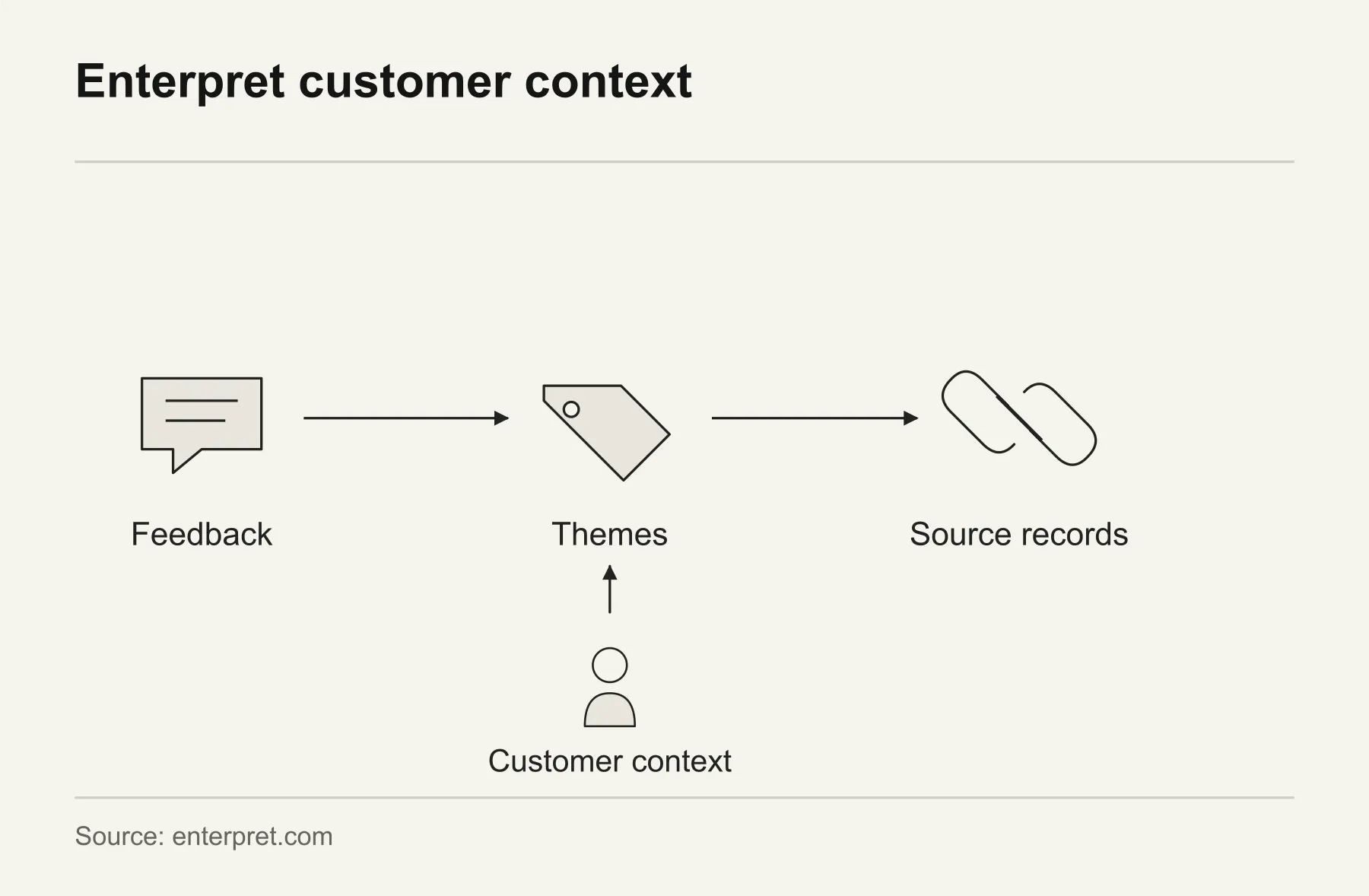
Enterpret connects recurring themes to the records and customer context behind them.
Pricing · Contact sales. Confirm connected sources, feedback volume, integrations, and historical-data access in the quote.
Scope to check · Confirm which internal and external sources are connected and whose views they cover. Trends in feedback are not, by themselves, a representative market sample or a test of an unlaunched proposition.
Connect supported feedback sources and customer context, then define the groups or issues to track. Sources can include external reviews and social signals as well as internal records. The findings depend on the sources and audiences represented.
Survey and quantitative tools: recurring studies and advanced methods
Qualtrics gives teams shared infrastructure for survey programs. quantilope focuses on advanced quantitative consumer studies. Attest connects consumer surveys with AI-assisted design and analysis, plus interviews to investigate the reasons behind a result.
Qualtrics Strategic Research: breadth and enterprise workflows
Qualtrics Strategic Research combines survey authoring, respondent collection, guided research methods, analysis, and governance. It serves teams that want common quantitative methods inside the same system used for broader experience-management work.
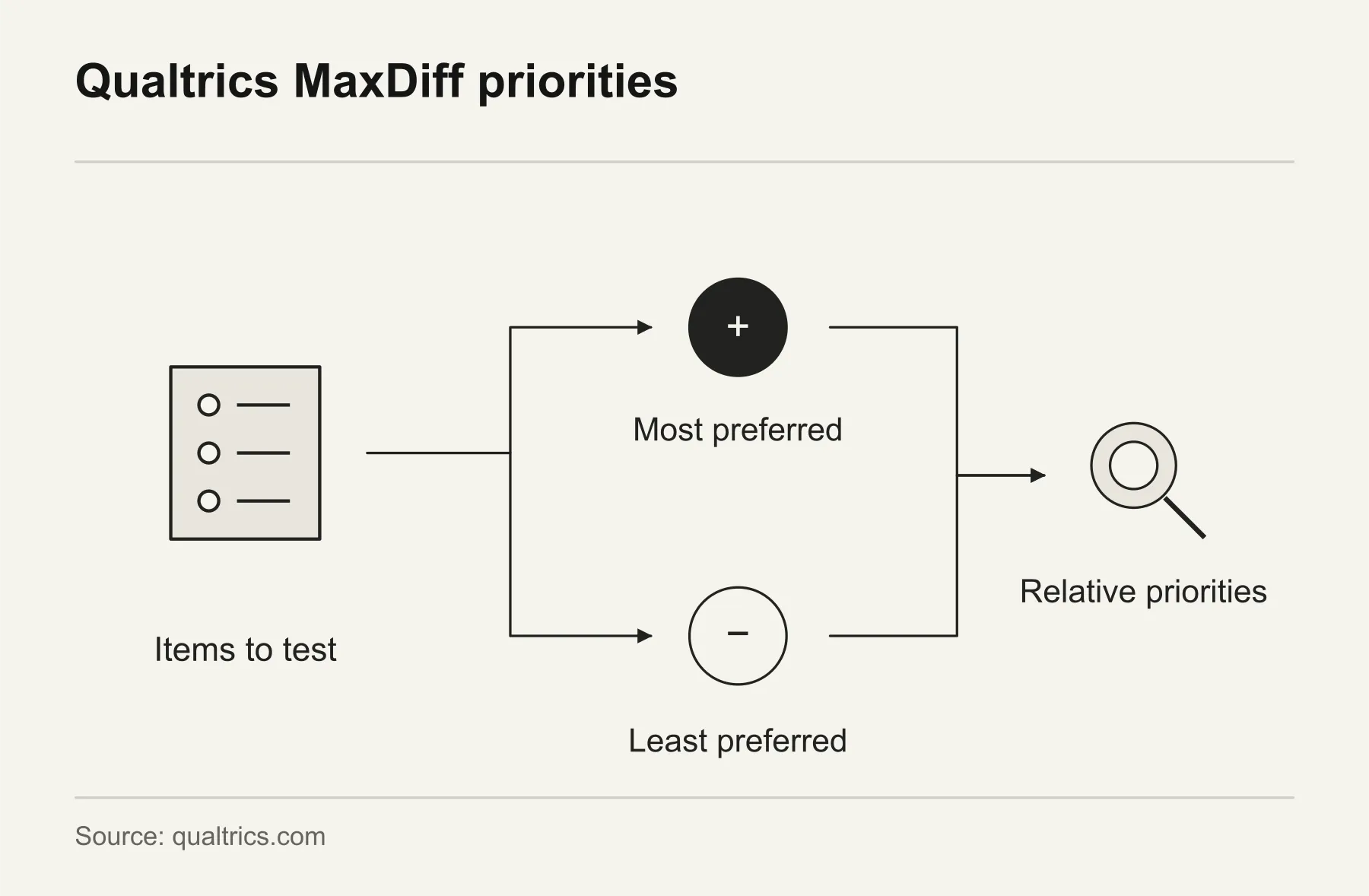
Qualtrics guides researchers through defining a MaxDiff study, refining the audience, and distributing the survey.
Pricing · Self-serve Strategic Research is $420 per month, billed as $5,040 annually, for 1,000 responses shared across users. Panel costs are separate. A basic Surveys account is free; enterprise pricing is custom.
Supply a questionnaire and audience definition. Qualtrics offers human-panel research and Edge Audiences synthetic research, which can also be combined in a research program. Specify the product and response source in your proposal, and report human and modeled bases separately. The Strategic Research subscription price above does not establish Edge Audiences pricing; confirm platform, sample and service charges for the scope you need.
For ongoing research, compare Vensia vs Lakmoos and Vensia vs Qualtrics Edge. Use our synthetic research brief template to define the decision, audience and output before comparing proposals.
quantilope: recurring consumer surveys and advanced analysis
quantilope combines survey creation, panel services, analysis, and charting for recurring product and brand studies. Methods include MaxDiff, conjoint, and segmentation.
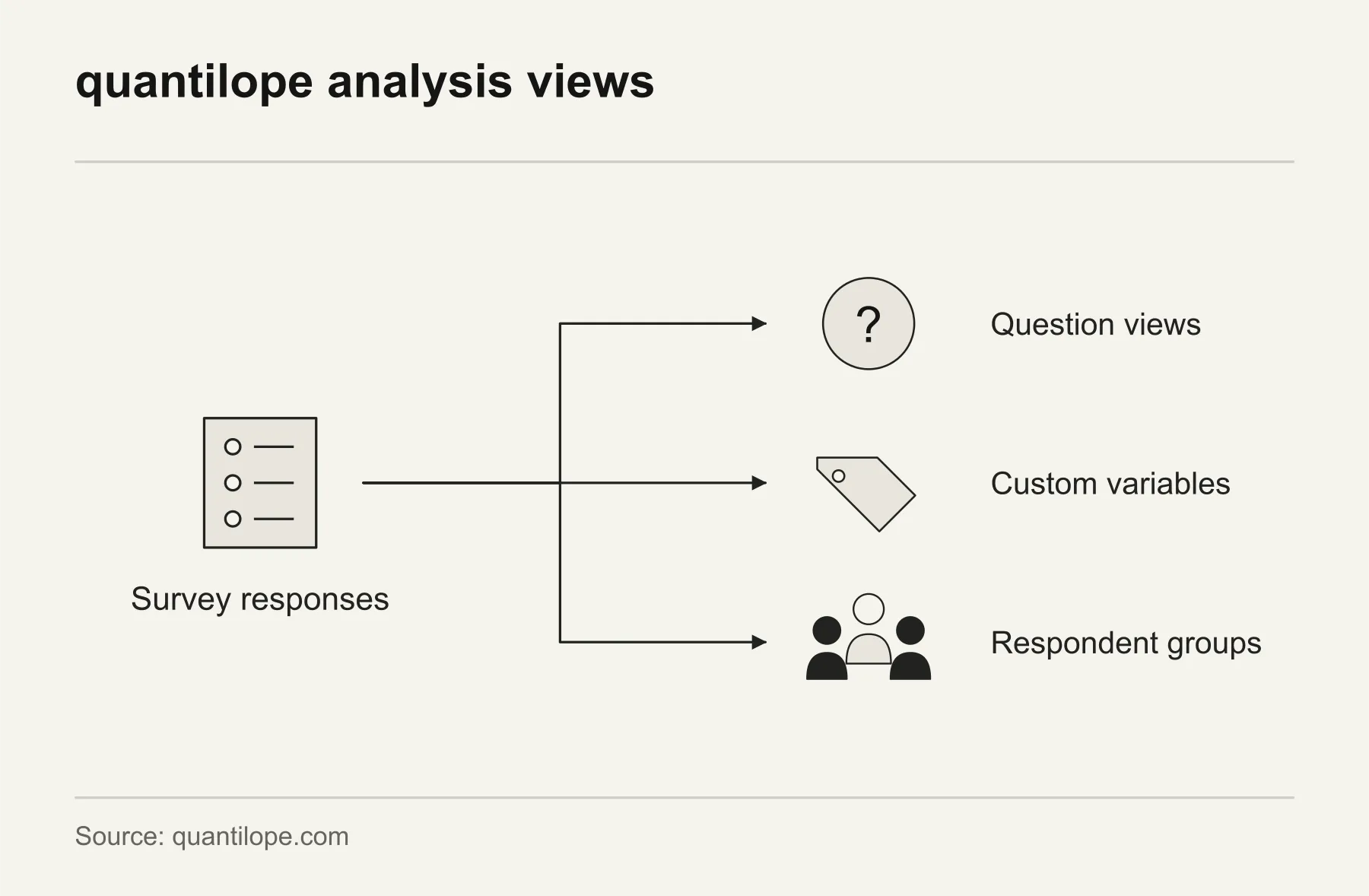
quantilope’s Analyze workspace splits a live brand-health study by survey questions, custom variables, and respondent groups.
Pricing · Business starts at $2,300 per month for three users. Confirm sample, study volume, services, and contract terms separately.
Scope to check · Conjoint and segmentation require the Enterprise plan, not the advertised Business tier.
Define the audience, survey and test design, then connect a panel or your own participant list. The survey workflow collects human responses. Confirm sample costs and whether the chosen plan includes the advanced method your decision requires.
Attest: connected consumer surveys and interviews
Attest brings consumer surveys and AI-moderated interviews into one workspace. Measure handles quantitative studies; Explore investigates the reasons behind responses. Compass helps create, edit and analyze the research. It fits consumer brands running recurring concept, creative, audience and category studies.
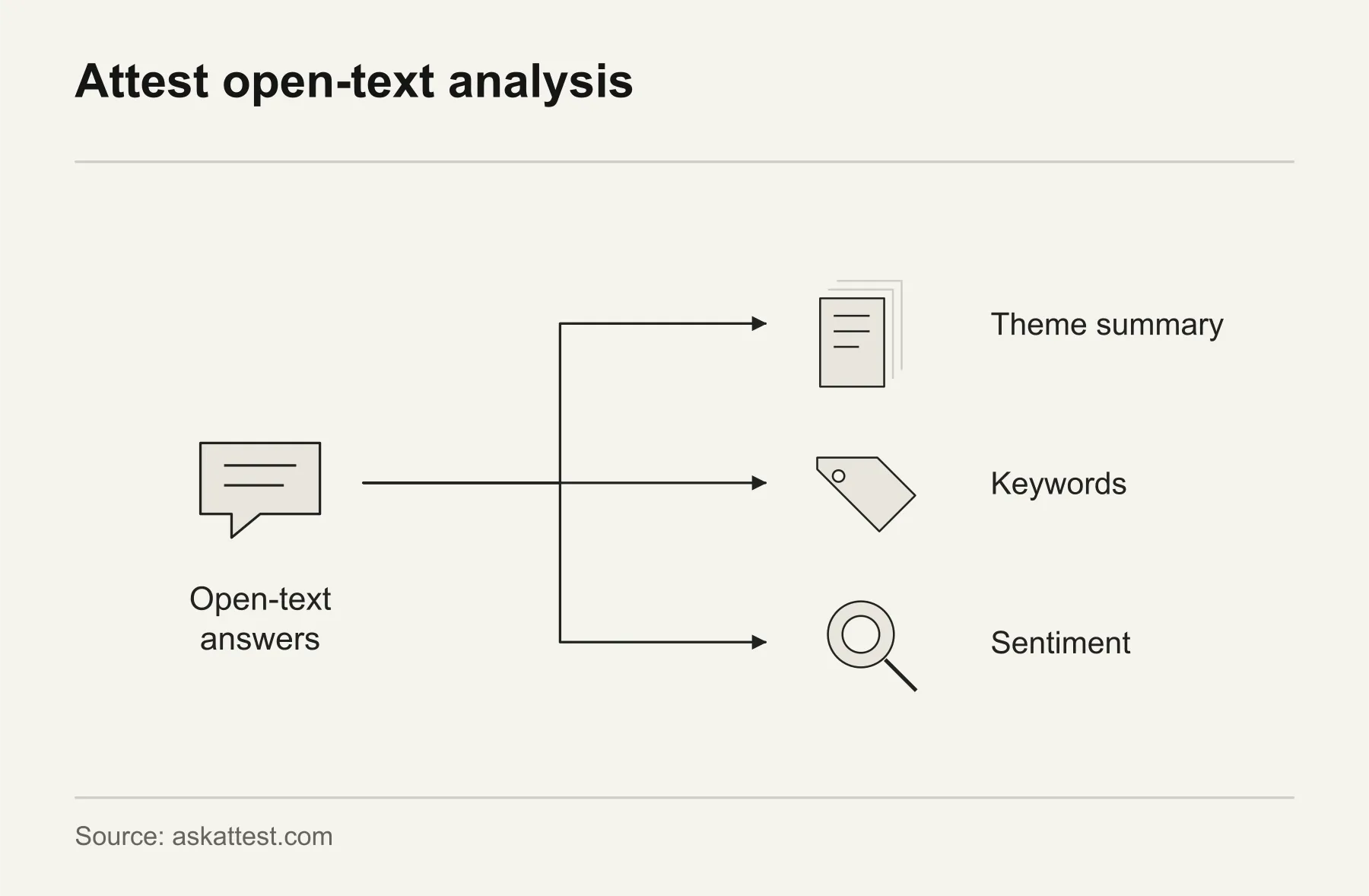
Attest summarizes open-text survey responses inside the reporting workflow.
Pricing · Annual plans use credits. One credit covers one answer to one survey question from one qualifying respondent. A 10-question survey of 500 people uses 5,000 credits. Unused credits expire after 12 months; research support is included.
Set the question, audience criteria and any concepts or creative to test. Measure and Explore collect responses from recruited participants. Check qualifying sample sizes and credit use before comparing total study capacity across annual plans.
Audience and market intelligence: profiles, conversation and digital activity
Conversation, website visits and survey responses capture different signals. GWI profiles consumers, Brandwatch tracks public discussion and Similarweb estimates digital activity. Check audience coverage and data freshness, then decide whether your question calls for analyzing existing activity or testing how people may respond to a new offer.
GWI: audience profiles and survey-grounded exploration
GWI provides recurring survey data for profiling audiences, comparing segments, and tracking attitudes and media behavior. Agent Spark adds conversational exploration of that data. GWI also offers Synthetic Audiences, with modeled consumer and focus-group responses grounded in its survey research.
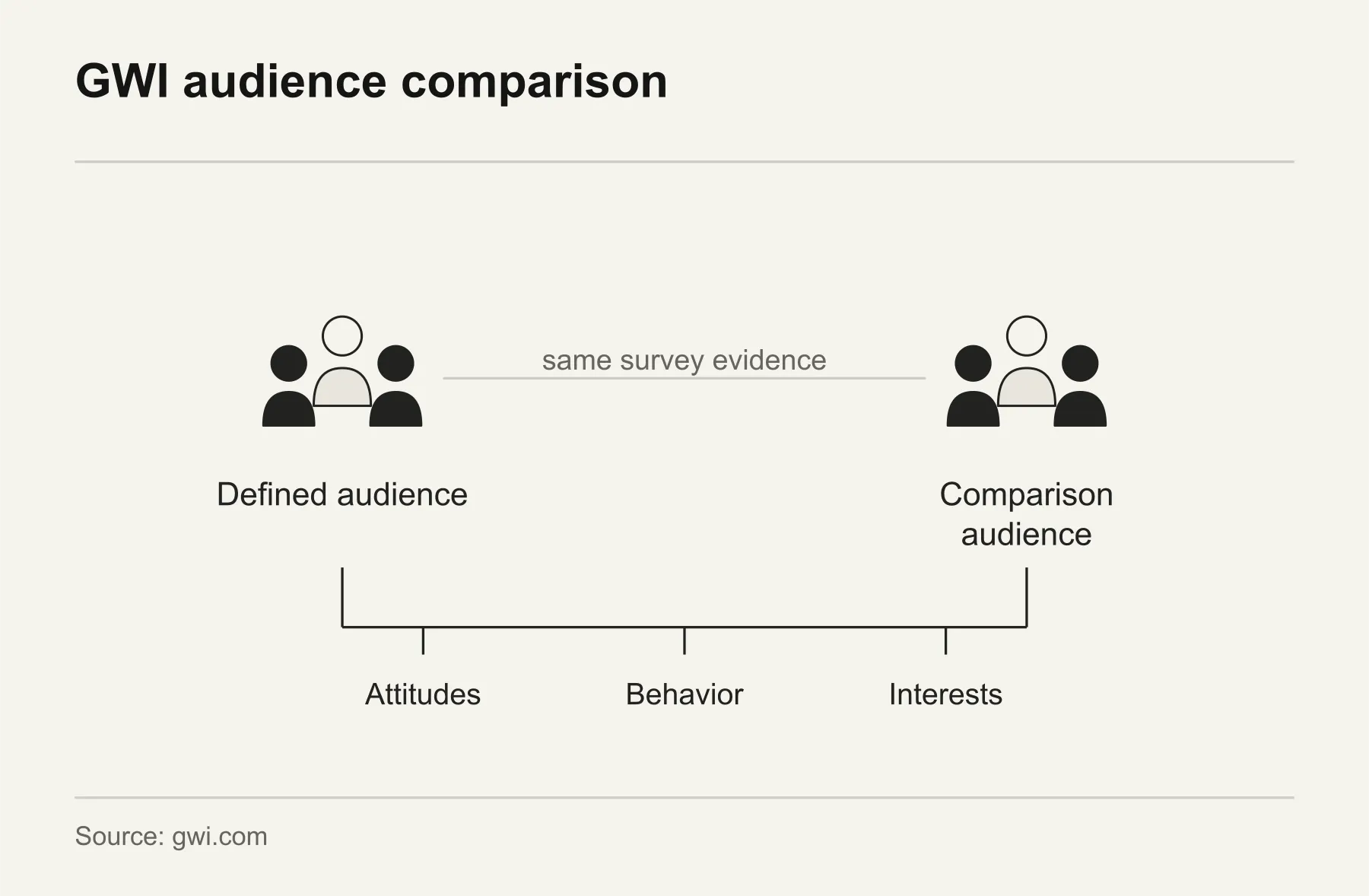
GWI’s instant-insights dashboard compares an audience with category and interest benchmarks.
Pricing · GWI pricing separates platform seats, integration usage and bespoke research. Ask for the datasets, seat permissions and Agent Spark or Synthetic Audiences access included in your proposal.
Coverage: check the markets, audience characteristics and fieldwork behind GWI's survey data. For Synthetic Audiences, also ask how that coverage supports the population and new question you want to model.
Define audience filters, markets and comparison groups. When querying existing survey results, check the questions, fieldwork dates and segment bases the dataset contains. When using Synthetic Audiences, identify the output as modeled responses and assess its grounding and relevant validation. Keep retrieved survey findings and generated persona responses distinct in the readout.
Brandwatch Consumer Research: online conversation
Brandwatch Consumer Research tracks public online discussion about brands, categories, competitors, and emerging issues. Teams use queries, segmentation, image analysis, dashboards, and alerts to follow how a conversation changes.
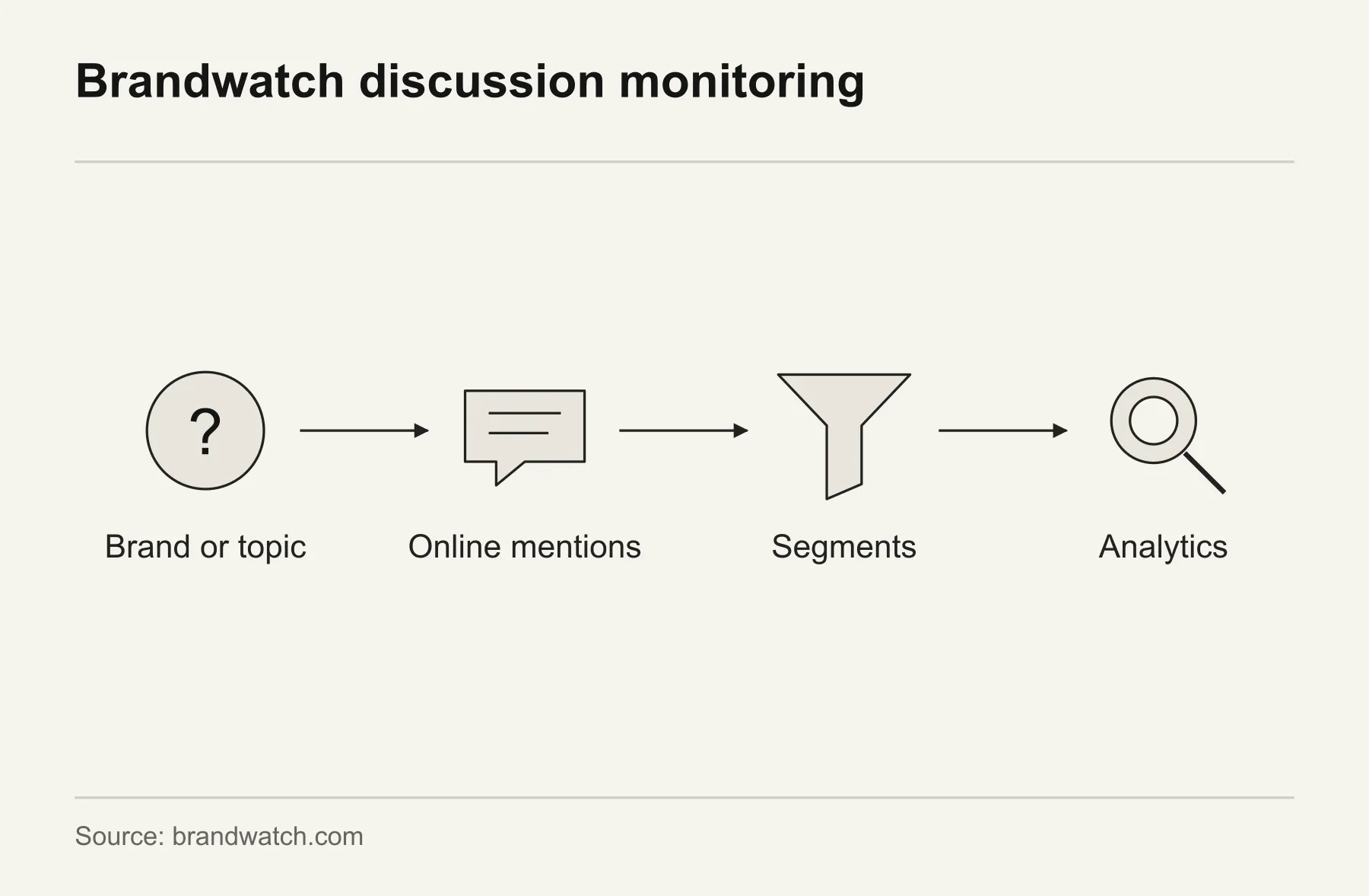
Brandwatch Consumer Research tracks conversation volume, share of voice, and topic shifts in one dashboard.
Pricing · Brandwatch pricing is custom. Confirm source coverage, historical access, mention volume, and exports in the quote.
Scope to check · Online conversation is shaped by who posts and what platforms expose. It is not a population estimate or a direct measure of purchase behavior.
Define brands, topics, keywords, sources and time periods to monitor. The core workflow analyzes online discussion, with first-party data also supported. Check source access and who is represented before interpreting discussion volume as wider consumer demand.
Similarweb: competitor traffic and digital momentum
Similarweb Web Intelligence estimates website traffic, engagement, acquisition channels, search demand, and audience overlap. It gives teams a comparable external view of digital competitors whose first-party analytics they cannot see.
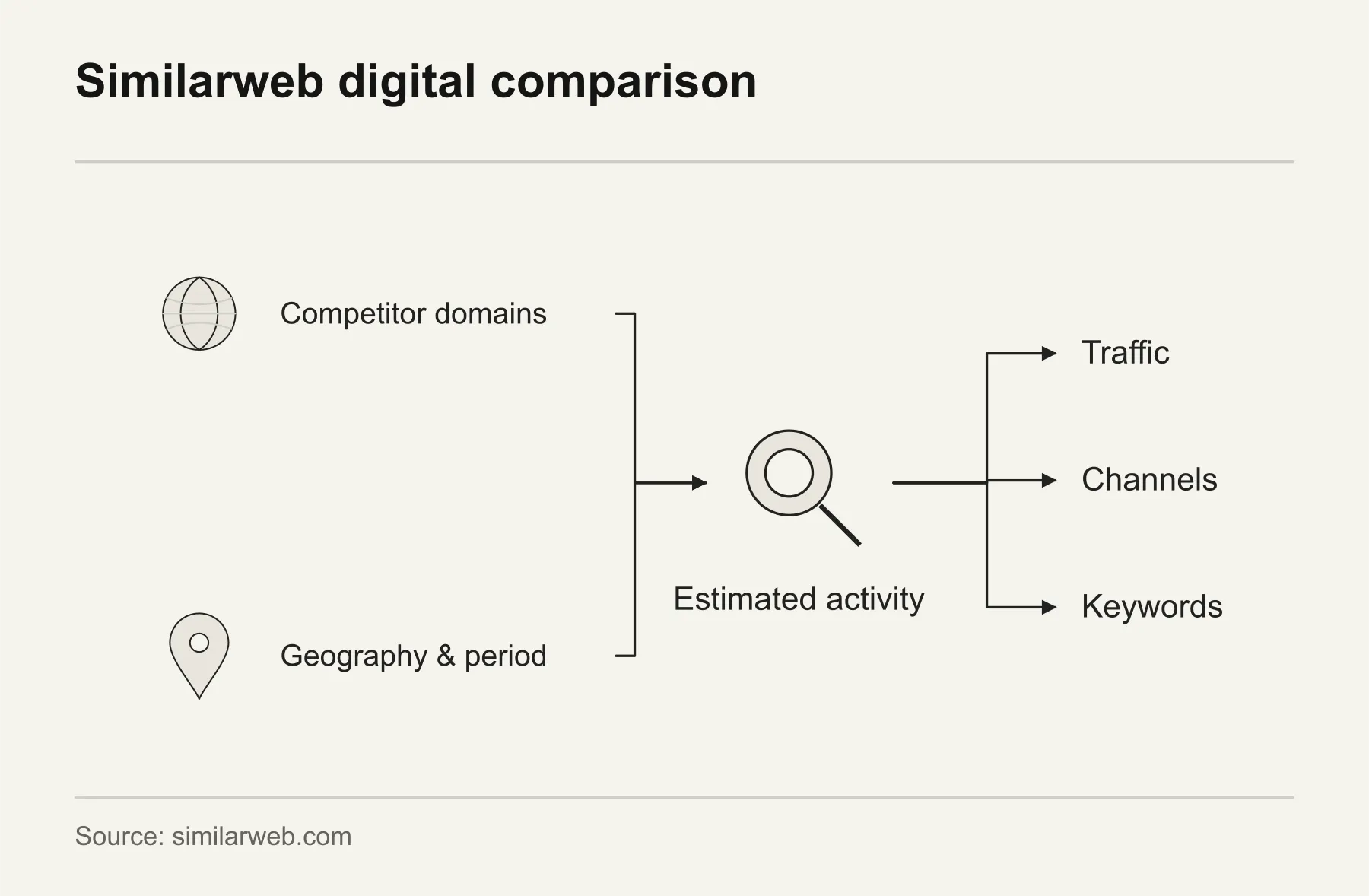
Similarweb compares competitors’ paid-search traffic, keywords, and engagement trends in a shared market view.
Pricing · Similarweb offers self-service plans and a trial; business and enterprise packages are custom-priced. Compare the countries, history, and export access included in the plan.
Scope to check · Estimated digital activity shows where attention moves, not why people moved or how they will respond to a new proposition.
For providers organized by audience evidence and research job, compare our consumer insights companies.
Specify competitor domains or a market category, geography and time period. The outputs describe estimated digital activity. Keep those estimates separate from a site’s own analytics and from evidence about why individual consumers chose a product.
AI desk research: a cited synthesis of connected evidence
Merciv brings internal consumer research, connected datasets, reviews and public sources into a cited brief. It suits a category or customer question whose evidence is scattered across documents and systems.
Merciv: consumer research briefs with linked sources
Merciv combines internal research, its own consumer datasets, syndicated data, reviews, social signals, and web sources into source-linked answers. Teams use it to compare categories, monitor consumer signals, and turn connected evidence into cited briefs.
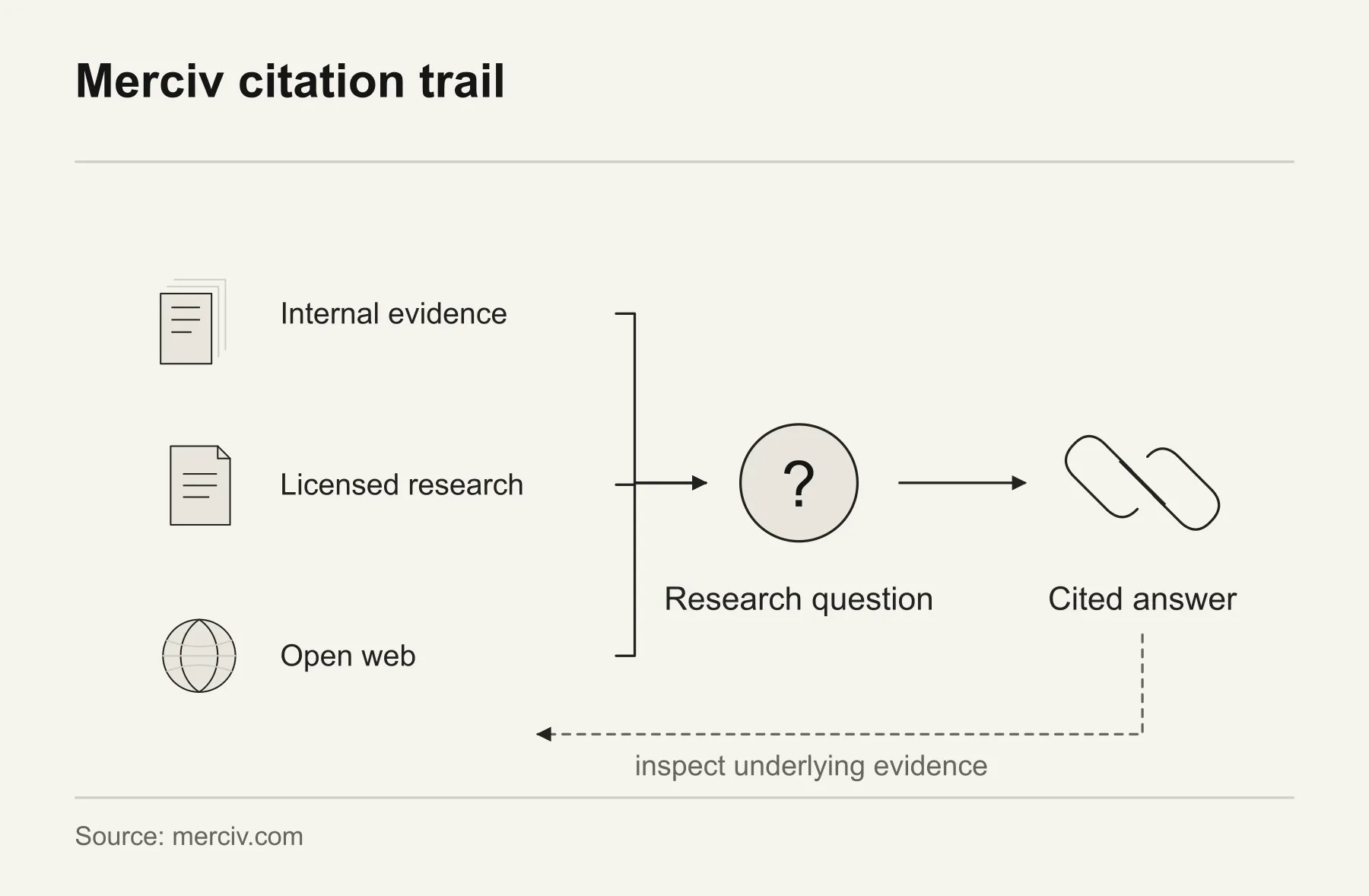
Merciv keeps source domains and confidence levels attached to the evidence behind an answer.
Pricing · A Merciv announcement offers Pro free while open beta lasts. Confirm whether that offer remains available and scope enterprise access to internal material, connected data and custom workflows separately.
Provide a research question and the documents or sources the answer should draw on. Inspect the citations, dates and coverage behind the resulting brief. A cited synthesis still depends on the quality and relevance of the underlying evidence.
Research with Vensia
Vensia: research, testing and prediction with a modeled audience
Vensia builds data-grounded synthetic populations for the audience behind a consumer or market decision. Our team runs surveys, interviews, ad and creative tests, concept and claims tests, pricing studies, segmentation and behavioral prediction.
For related decisions, see our guides to concept testing, message testing and synthetic versus human respondents.
Vensia returns an interactive report with quantitative results, qualitative drivers, segment differences and recommendations on a schedule agreed for your study.
What you receive from a study
See a real Vensia output from our iPhone Duo study, which modeled smartphone buyers’ responses to a foldable-phone offer. The price comparison asks how modeled qualification changes between a $1,999 offer and a $1,599 alternative.
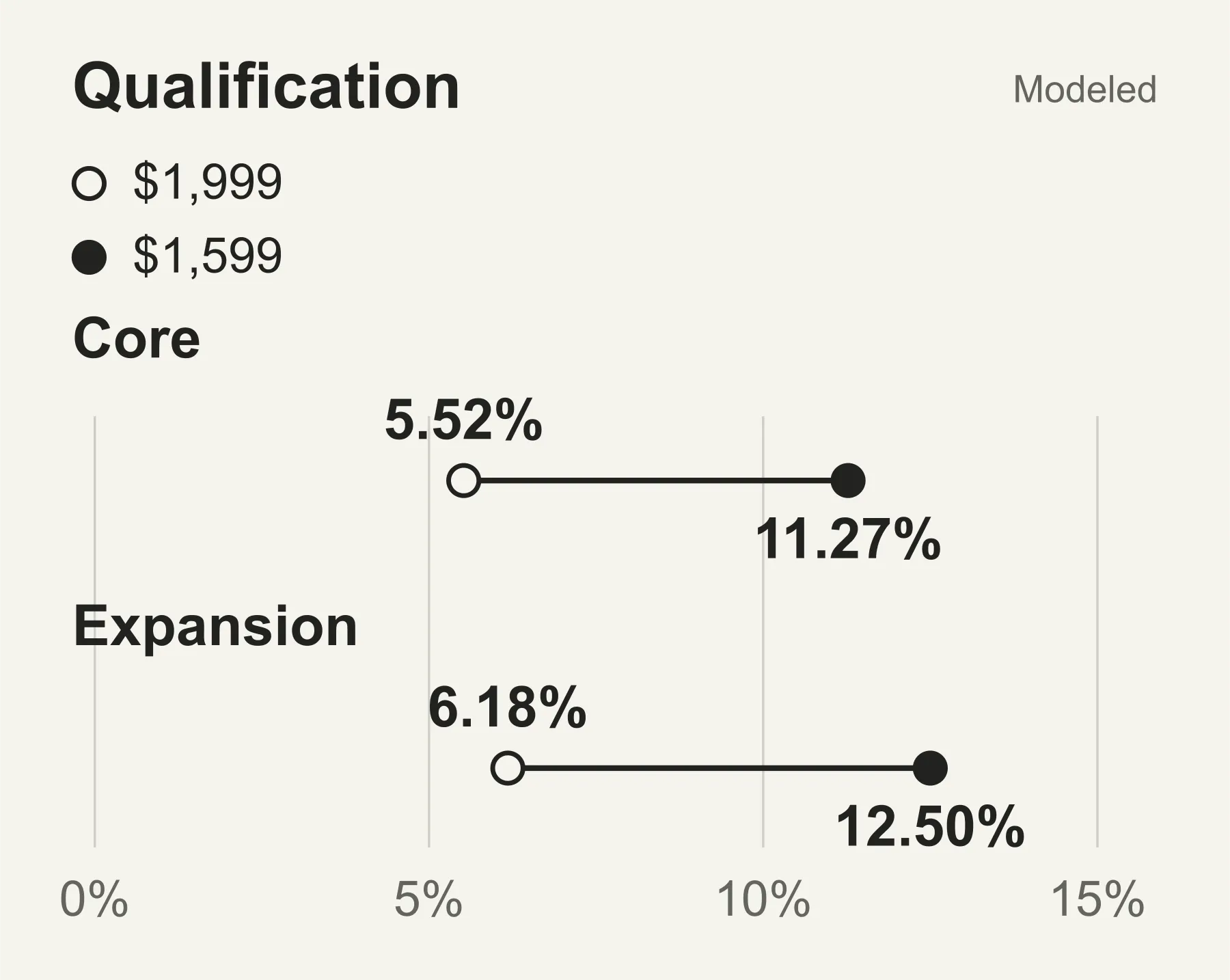
Core n=2,103; expansion n=2,897. Each matched comparison uses the same assigned profiles at two prices and stays separate from the main $1,999 offer. Qualification means meeting the study’s modeled funding and purchase-decision requirements.
Vensia’s report shows modeled qualification rising from 5.52% to 11.27% in the core comparison and from 6.18% to 12.50% in expansion. The figure keeps both audience bases and their own $1,999 baselines visible.
A product team can now weigh a larger audience against the margin sacrificed at a lower price. These are modeled decisions under the tested offers, not observed sales. Use our pricing research guide to connect the tested response with the economics of the offer.
Compare our approach with Aaru for pricing decisions, Evidenza for managed B2B research and Simile for behavioral simulation. Each guide works through a different commercial question.
Explore our foldable iPhone case study
- Study populations can include thousands of distinct agents grounded in real population, purchase, behavioral and factual survey evidence. The brief should state the audience composition and any weighting used.
- Ask for validation matched to the audience, question and outcome you plan to use. Our synthetic-user evidence page reports comparisons with human studies, including disagreements that change the interpretation. For a purchase prediction, ask which independent human or transaction evidence supports that particular task.
- Individual answers and full transcripts remain available.
- Rerun questions, ads, concepts and prices on the same population without repeating participant recruitment and fieldwork. Research follows the decision as it develops: a new claim, another audience segment, a revised price.
Our Artificial Societies comparison separates buyer choice from social influence. The Synthetic Users comparison turns exploratory interviews into an onboarding decision, while our Fairgen comparison distinguishes respondent twins, survey augmentation and the audience needed for a new launch.
Scope a Vensia study
Start a Vensia brief with the decision, complete alternatives and buyer-group differences that could change your action. Customer data is optional; agree the population’s grounding and study scope. Results are modeled responses, so direct sensory or physical-use questions still need participant evidence.
Use our market research services guide to compare responsibility for study design, audience evidence, interpretation and the recommendation.
For a comparison with a general-purpose chatbot, read our Vensia and ChatGPT research comparison.
If you are choosing a tool to test ads, compare ad testing platforms by what each provider measures: predicted attention, human viewer responses or modeled audience explanations.
What should an enterprise team check?
Agree who can access studies, how participant or customer data is handled, what can be exported and how long records remain available. Ask which controls, integrations and research services are included in the proposed plan. Then run the same brief through each supplier’s demonstration and inspect one finding back to its underlying evidence.
Choose the tool by the next decision and the work it covers
If the decision requires a new product, price or campaign comparison, Vensia can build the audience, run the study and connect modeled choices with reasons and recommendations. If the missing answer is in recorded customer or market evidence, shortlist the source or analysis workflow that covers it.
Questions to ask a research provider
- Who exactly will answer, and how are they recruited or built?
- What will you hand back: raw records, tables, a report or a recommendation?
- What validation have you published, for which tasks, and where can we inspect it?
- What does the whole project cost, including recruitment and analysis, and how long does it take?
- Who does the work on our side, and who on yours?
- What would make you tell us the study cannot answer our question?